


Abstract
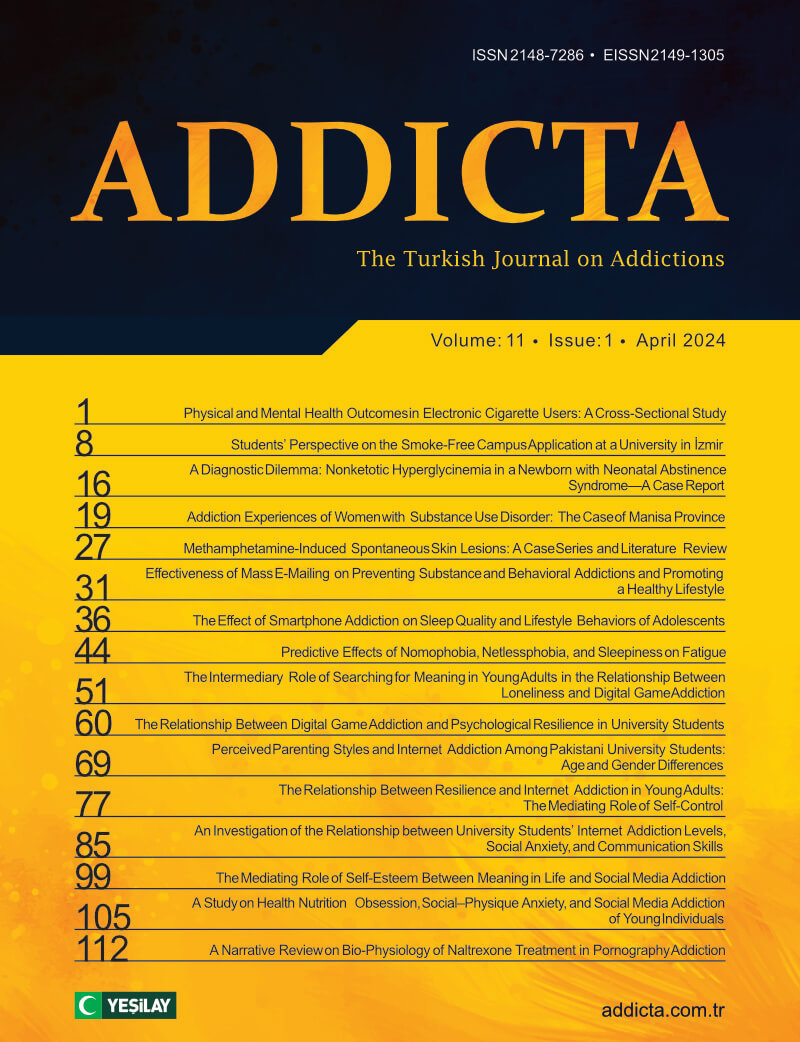
Abstract: This study aims to examine the reasons for starting and continuing to use substances, the changes they experience in accessing and receiving treatment, and the changes observed in family and social support systems with a biopsychosocial approach. Qualitative research method was used in this study. In addition, it was conducted with women who received inpatient treatment at the addiction rehabilitation center of Manisa Mental Health and Disorder Hospital and who did not use substances in the last year. The research sample was determined according to the principle of maximum diversity. Data were collected through in-depth telephone interviews with 31 women. In addition, the data were analyzed by content analysis using the Maxquda is qualitative data analysis (MAXQDA) program. Most of the participants stated that their relationships with their families deteriorated during substance use; they faced economic problems, and they were stigmatized more deeply because they were women. The disadvantaged situations experienced by women within the scope of gender inequality are deepened by the phenomenon of addiction, making it difficult for them to access health and social services.
Keywords: Biopsychosocial model, social service, substance use disorder, women patient, women addiction
License
Copyright (c) 2024 The Author(s). This is an open access article distributed under the Creative Commons Attribution License (CC BY), which permits unrestricted use, distribution, and reproduction in any medium or format, provided the original work is properly cited.