


Abstract
Social media addiction has become an area of increasing research interest over the past decade. Many factors and variables are associated with the development of social media addiction, as well as others that have remained unexplored. Therefore, the present study examined some of these novel factors. More specifically, the study examined whether happiness mediated the association between spiritual transcendence and social media addiction and whether cognitive and affective mindfulness moderated the mediating effect between these variables. Data were collected from 572 young adults (321 females, 251 males) using convenience sampling. Moderated mediation analysis was conducted using Hayes’ PROCESS macro. The results indicated that happiness was a mediator in the relationship between spiritual transcendence and social media addiction. Moderated mediation analysis showed that spiritual transcendence directly predicted social media addiction and also predicted it indirectly through its effect on happiness. Moreover, cognitive and affective mindfulness was a moderator in the relationship between spiritual transcendence and social media addiction, and between spiritual transcendence and happiness. The results also showed that the inverse relationship between spiritual transcendence and social media addiction was partially explained by happiness. The findings suggest that (i) higher levels of spiritual transcendence are associated with greater happiness, and (ii) high cognitive and affective mindfulness, along with increased spiritual transcendence, may be helpful in reducing the adverse effects of social media addiction.
Keywords: spiritual transcendence, happiness, cognitive and affective mindfulness, social media addiction, moderated mediation analysis
Main Points
- Happiness mediated the relationship between spiritual transcendence and social media addiction.
- Higher levels of spiritual transcendence were associated with greater happiness.
- High cognitive and affective mindfulness, along with increased spiritual transcendence, may be helpful in reducing the adverse effects of social media addiction.
Introduction
Individuals are in constant communication. Moreover, technological development has changed individuals’ communication over time (Kaya, Şata et al., 2025; Türk et al., 2025). For instance, instead of face-to-face communication, increasing numbers of individuals now communicate through social media and share many different aspects of their lives (Choi, 2023). Social media sites comprise a vast sharing network, including news platforms, where individuals communicate and share information (Kaya, Seyrek et al., 2025; Wartberg et al., 2020). In line with technological developments, social media has become an essential part of individuals’ daily lives, and individuals in different places can communicate more efficiently with the help of technological advances (Khan et al., 2021).
The number of individuals using social network platforms has steadily increased. According to the 2025 Digital report by We Are Social, there are currently over 5.76 billion internet users, and over 5.41 billion social media accounts (Kemp, 2025). Moreover, 65.7% of all individuals worldwide are online, and social media use has become an integral part of individuals’ daily lives all over the world (Kemp, 2025). Individuals use these platforms for various purposes, including searching for information, sharing interests, thoughts, and activities, establishing social communication, having fun, reducing boredom, escaping from negative emotions, and obtaining positive feedback (Çömlekçi & Başol, 2019). With the increase in the purpose and frequency of use of social media, negative experiences have also begun to emerge (e.g., social media addiction, cyberbullying, etc.) (Khan et al., 2021).
Social Media Addiction
Parallel to technological development, communication and entertainment tools are also diversifying and developing. Social interactions online allow individuals to receive instant feedback. This can increase the time spent on social media and make the platforms attractive, especially among young people (Choi, 2023). Social networking sites are spaces where individuals create personal profiles, communicate with friends, and meet others for their hobbies (Griffiths et al., 2014). Moreover, social networks allow individuals to communicate with each other online at any time, regardless of where they are in the world.
Their widespread use has turned these networks into a critical leisure time activity. This has meant that some individuals want to stay online all the time. However, being online for a long time can lead to various risks (e.g., internet addiction, smartphone addiction, social media addiction, etc.). As a result of increased usage rates and frequency, negative consequences have been reported (Khan et al., 2021). One of the most common adverse effects is problematic social media use, sometimes called ‘social media addiction’ (Kuss & Griffiths, 2017). Evidence suggests that some social media users may experience mental health problems (Griffiths et al., 2014). Moreover, excessive use of social media is associated with negative behaviors such as substance abuse (Zendle & Bowden-Jones, 2019). Social media addiction can be considered a behavioral addiction (Ergün et al., 2025; Özok et al., 2025). This type of addiction can be similar to substance-related addictions because it incorporates increasing use over time, detrimental emotional and physical reactions, and conflict with interpersonal relationships, occupation, and education (Kuss & Griffiths, 2011).
Spiritual Transcendence
Spiritual transcendence can be defined as a state of being where individuals have overcome the limits of physical existence, which comprises decreasing selfishness and increasing the value of universality (Piedmont & Leach, 2002). As a concept aligned with self-actualization, spiritual transcendence reminds individuals that their bodies and actions are limited. It advises overcoming this limitation with diet, kindness, and worship (İme et al., 2019). Self-actualized individuals who have made transcendence a lifestyle do not act for instant pleasures (Piedmont et al., 2013). Consequently, individuals can live their lives as a harmonious whole with a more extensive and comprehensive perspective and can establish a strong bond with humanity among themselves (İme et al., 2019).
The spiritual transcendence of self-actualized individuals is the unique experience between the things they value and the ability to overcome perceptions, goals, life difficulties, and feelings (İme et al., 2019). Therefore, spiritual transcendence also functions as a coping mechanism. It is also a construct in which individuals associate the state of awareness with a larger paradigm (Piedmont, 1999). Considering the definition and function of spiritual transcendence, it can be posited that the increase in spiritual transcendence among self-actualizing individuals has a protective effect against harmful situations and actions such as addiction (Demiroğlu & Taş, 2021).
Cognitive and Affective Mindfulness
Repeating pleasurable behavior over long periods may cause such behavior to become an addiction for a minority of individuals (Tran et al., 2022). Addicted individuals have problems managing and directing their behaviors if they cannot repeat the behaviors they are addicted to (Sechi et al., 2021). They experience uncomfortable feelings such as restlessness and irritability. Moreover, the repetition of behaviors plays a vital role in addiction-related emotions (Sechi et al., 2021). Emotions such as the desire for the conduct or substance, the feeling of being deprived of the behavior or substance, or the hatred of the behavior or substance play a very active role in the development of addiction and the cessation of the addiction (Chen et al., 2016). This shows a close connection between addiction and cognitive-affective components (Chen et al., 2016). In short, recognizing and regulating them is necessary for a healthy mental state among individuals.
It is thought that mindfulness reduces individuals’ interest in internal and external phenomena, helps them avoid attachment, facilitates emotional regulation, and improves well-being (Kumar, 2002). Mindfulness refers to paying attention in a particular way on purpose, in the present moment, and nonjudgmentally (Kabat-Zinn, 1994). Mindfulness of emotions allows individuals to recognize and define emotions that arise in themselves and others (Dizen et al., 2005). Affective mindfulness for spiritual well-being moves in parallel with emotion regulation. Moreover, emotion regulation comprises all abilities, such as controlling attention, controlling impulses, leaving behind or changing extreme reactions, and giving self-calming suggestions (McClelland et al., 2018). Individuals can control their emotions through mindfulness by indirectly increasing affective mindfulness of emotion regulation.
Theoretical explanations have drawn attention to mindfulness’s cognitive and affective components (Kabat-Zinn, 2003). Mindfulness’s cognitive components can be associated with individuals’ mindfulness of their thoughts, planning what to do before the behavior occurs, and arranging their ideas (Demir & Doğanay, 2009). On the other hand, affective mindfulness components can be associated with individuals’ mindfulness of their emotions, controlling them, and overcoming adverse effects (Feldman et al., 2007). Cognitive and affective mindfulness contribute to a more systematic and orderly lifestyle for individuals. These effects of mindfulness are often used as a tool to overcome psychological and behavioral problems that affect individuals’ lives, such as stress, anxiety, and depression (Johannsen et al., 2022), problem gambling (Shonin et al., 2013), problematic internet use (Sun et al., 2021), and social media addiction (Sriwilai & Charoensukmongkol, 2016).
Happiness
According to Aristotle, happiness is expressed as one of the primary pursuits of individuals (Cashen, 2012). For this reason, it has constantly attracted the attention of researchers. The empirical evaluation of happiness has intensified. Happiness can be defined as the satisfaction of long-term and short-term wishes and the gathering of pleasure, joy, and life satisfaction in the same place (Lyubomirsky, 2007). It can be interpreted as individuals’ general satisfaction with their lives and mental well-being (Diener, 2000). Happiness improves life by helping people feel healthy, prolong life expectancy, choose a job, increase income, and interact socially with other benefits (Gencer, 2018). Based on these definitions, happiness is a concept that evokes good feelings and leads to positive mental well-being, productive goals, increased satisfaction, and good quality of life.
Happiness, which is related to the intensity of emotional elements, consists of three essential components (Argyle et al., 1989). These are (i) having a positive mood, (ii) being attached to life, and (iii) having meaning in life. In addition, Diener (2006) associates happiness with a general assessment of life satisfaction and a good life. In this context, happiness is associated with positive emotions and behaviors such as positive well-being, life satisfaction, and high self-efficacy (Mortezabeigi et al., 2022). On the other hand, unhappiness is often associated with negative emotions and behaviors such as dissatisfaction, depression, and chronic health problems (James et al., 2022), as well as detrimental behaviors (e.g., social media addiction; Demir, 2021).
The Present Study
Türkiye’s dominant spiritual perspective (where the present study was carried out) has been dramatically influenced by Sufism. The basis of Sufism (i.e., Islamic mysticism) is spiritual training, where individuals protect themselves from the effects of temporary worldly life to get closer to Allah by purifying themselves from their desires, purifying their souls, and attaining happiness by striving for spiritual transcendence throughout their lives (Sa’dudin, 2020). In the context of the present study, it refers to a connection between spiritual transcendence and happiness. Sufism defines the state of spiritual transcendence with the concept of a perfect human being (Doğan, 2014). An ideal human being can be defined as someone who understands the world’s transience and has reached happiness (Sa’dudin, 2020). This can enable individuals to control their behavior and emotions by creating a conscious hierarchy of actions and indirectly preventing problems such as addiction. Individuals who develop cognitive and affective mindfulness can be successful and happy if they learn to use their goals and guidance tools (Cruz et al., 2016). In addition, spiritual transcendence may be related to impulse control and delayed gratification and may therefore protect individuals from addiction and make them happy (Herchenroeder et al., 2022).
Broaden-and-build theory (Fredrickson, 2004) suggests that positive emotions can enhance an individual’s mindset and improve well-being by increasing personal resources. The theory is based on two essential elements. Firstly, positive emotions expand an individual’s thought world and create unique mental bases for them. Consequently, the individual is prevented from displaying other negative emotions or negativities. The second benefit of positive emotions is that they enable the individual to develop new positive social bonds, actions, and thoughts due to their expansion of mental capacity. A significant purpose of these resources is to improve the chances of survival by allowing individuals to cope with problems successfully (Fredrickson, 2004). Moreover, mindfulness-based cognitive therapy posits that mindfulness-based interventions can alleviate addictive behaviors by increasing self-awareness and altering an individual’s relationship with thoughts and impulses (Kuyken et al., 2010). Consequently, cognitive and affective mindfulness and happiness contribute to elevating positive emotions and preventing addiction to pleasure-oriented events (e.g., social media use).
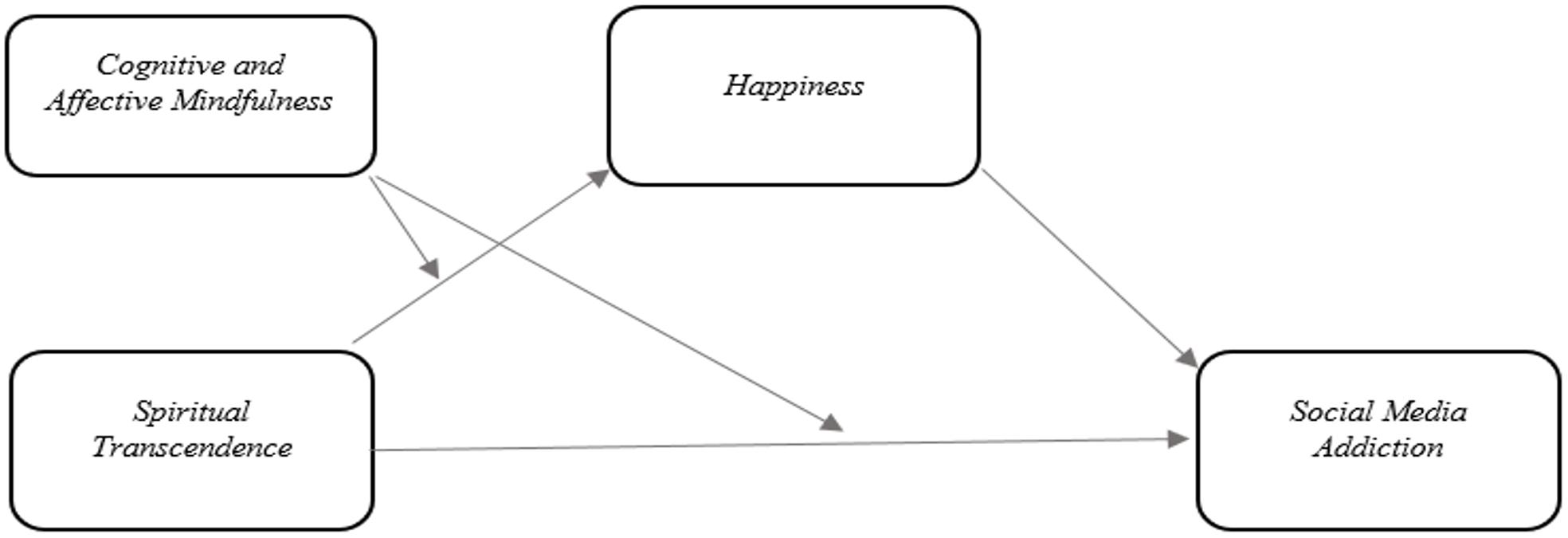
In addition to the aforementioned theoretical framework, empirical studies have shown that spirituality and self-transcendence have been used effectively in treating addictions (Er & Buzlu, 2022; Garland et al., 2022; Roy et al., 2021). Several studies have demonstrated that spirituality and spiritual practices are associated with positive emotions (e.g., happiness) (Anli & Bilgin, 2022; Martin et al., 2023). Happiness is negatively related to social media addiction (Baltaci, 2019) and problematic internet use (Yilmaz & Karaoglan Yilmaz, 2023), and it is also positively associated with social media use (Pittman & Reich, 2016). Studies have also demonstrated that mindfulness can contribute to the sense of well-being on a hedonic and eudaimonic level, and significant associations have been found between the use of mindfulness and a variety of cognitive and affective indicators of mental health and happiness (Brown & Cordon, 2009; Coo & Salanova, 2018). In light of theoretical and empirical evidence, the present study examined the mediating role of happiness in the relationship between social media addiction and spiritual transcendence, and in moderating the positions of cognitive and affective mindfulness in this relationship in the same model (see Figure 1).
The present study is beneficial for the advancement of the literature, practical applications, and informed policy development. For example, social media addiction is a phenomenon that becomes increasingly complex due to the increasing opportunities offered by social media. Therefore, studies that examine its complex nature are needed. Among its practical contributions, the study’s findings will enable families to access protective and preventive interventions, and practitioners to conduct more effective interventions in addressing social media addiction. Moreover, it will provide policymakers with resources to develop applications that address the academic and psychosocial risks associated with the negative effects of social media.
Consequently, the following hypotheses (Hs) were posited: spiritual transcendence negatively predicts social media addiction (H1), spiritual transcendence positively predicts happiness (H2), happiness negatively predicts social media addiction (H3), happiness has a mediating effect in the relationship between spiritual transcendence and social media addiction (H4), cognitive and affective mindfulness have a moderating effect on the relationship between spiritual transcendence and happiness (H5), and cognitive and affective mindfulness have a moderating effect on the relationship between spiritual transcendence and social media addiction (H6).
Methods
Participants and Procedure
The present study was conducted using a cross-sectional survey. This method was utilized to explain the relationship between spiritual transcendence, happiness, and cognitive and affective mindfulness, which are believed to influence social media addiction. To achieve this objective, a series of mediation and moderation analyses were conducted. The mediating effect of happiness on the relationship between spiritual transcendence and social media addiction, as well as the moderating role of cognitive and affective mindfulness on the pathways from spiritual transcendence to happiness and social media addiction, were examined. Demographic information of the participants is presented in Table 1.
| Table 1. Participants’ demographic characteristics (N=572) | |||
| Variables |
|
|
|
| Gender | Female |
|
|
| Male |
|
|
|
| Socioeconomic levels | Low |
|
|
| Medium |
|
|
|
| Upper |
|
|
|
| Daily usage of the internet | 0-60 minutes |
|
|
| 61-120 minutes |
|
|
|
| 121-180 minutes |
|
|
|
| 181 minutes or more |
|
|
|
| Grade | 1st grade |
|
|
| 2nd grade |
|
|
|
| 3rd grade |
|
|
|
| 4th grade |
|
|
|
| Total |
|
|
|
Power analysis was performed to determine the required sample size for the present study. Therefore, alpha was set at the standard level of 0.05, small effect size r = 0.20, and power at 0.80 (Cohen, 2013). According to the determined parameters, the minimum sample size was 395 participants. A total of 590 people initially participated in the study. In addition, the Mahalanobis distance coefficient was examined to determine whether the dataset had extreme values. A total of 18 outliers in the dataset were removed. The final sample comprised 572 participants (321 females, 251 males; Mage = 22.89 years, SD = 4.84), aged 18-49 years. Convenience sampling was used to recruit the sample because it is cost-efficient regarding time, money, and effort (Şata, 2020).
Participants were recruited from students attending university classes. The researchers made announcements to all participants they could reach via social media platforms (e.g., Facebook, Instagram, X). A pre-prepared link was sent to university students who wanted to participate in the study. Participants in the study were from the Eastern provinces of Türkiye (e.g., Ağrı, Kars, and Erzurum). The data were collected online through Google Forms. The survey took approximately 20 minutes to complete. The participants provided electronic informed consent before completing the study. They were assured that all information provided was anonymous and confidential and that they could stop answering without penalty. Ethics approval for the present study was obtained from the first author’s university ethics committee (Reference number: E. 34364). Moreover, the study was carried out according to the Declaration of Helsinki.
Measures
Cognitive and Affective Mindfulness Scale-Revised (CAMS-R)
The CAMS-R (Feldman et al., 2007; Turkish version: Çatak, 2012) was used to assess cognitive and affective mindfulness based on internal experiences. The 10-item Turkish version contains items (e.g., “I can accept things I cannot change” and “It is easy for me to keep track of my thoughts and feelings”) that are scored on a four-point scale from 1 (Rarely) to 4 (Almost always). Scores range from 4 to 40, and higher scores indicate higher cognitive and affective mindfulness. The internal consistency in the present study was good (Cronbach’s α = 0.70; McDonald’s ω = 0.71).
Spiritual Transcendence Scale (STS)
The STS (Piedmont, 1999; Turkish version: İme et al., 2019) was used to assess spiritual transcendence. The 24-item Turkish version contains items (e.g., “I believe there is a bigger plan for life” and “I had a spiritual experience where I forgot where I was or how time passed”) rated on a five-point scale from 1 (Rarely) to 5 (Almost always). The scores range from 24 to 120, and higher scores indicate a higher level of transcendence. The internal consistency in the present study was very good (Cronbach’s α = 0.80; McDonald’s ω = 0.80).
Oxford Happiness Questionnaire Short Form (OHQ-SF)
The OHQ-SF (Hills & Argyle, 2002; Turkish version: Doğan & Çötok, 2011) was used to assess happiness. The seven-item Turkish version contains items (e.g., “I am quite happy with everything in my life” and “I become aware of the beauty around me”) that are rated on a five-point scale from 1 (Strongly Disagree) to 5 (Completely Agree). The scores range from 7 to 35, and higher scores indicate greater happiness. The internal consistency in the present study was adequate (Cronbach’s α = 0.64; McDonald’s ω = 0.64).
Social Media Addiction Scale (SMAS)
The Turkish SMAS (Günüç, 2009; revised by Çömlekçi & Başol, 2019) was used to assess the risk of social media addiction. The seven items (e.g., “People around me complain about the time I spend on social media” and “Even if my friends call me, I can’t get away from social media”) are rated on a five-point scale from 1 (Never) to 5 (Always). The scores range from 7 to 35, and higher scores indicate a greater risk of social media addiction. The internal consistency in the present study was good (Cronbach’s α = 0.75; McDonald’s ω = 0.75).
Statistical Analysis
All analyses used SPSS version 26, Hayes’ (2017) PROCESS macro (version 3), and G* Power 3.1.9.7 programs. Before the analyses, the skewness and kurtosis values were examined to understand whether the necessary assumptions were met for the parametric tests. The data met the criteria of normality and linearity. A skewness and kurtosis value in the range of |2| indicates a normal distribution of the variables (Field, 2009). In addition, Pearson correlations between the variables were examined, although the correlation values were not very high. Moreover, tolerance, variance inflation factor (VIF), and confidence interval (CI) values were examined to test for multicollinearity. Acceptable values for tolerance and VIF are less than 10, and the CI value is between 10-30 (Çokluk et al., 2012). The values were in the expected range, with no multicollinearity issues. Analyses were therefore carried out with all 572 participants. The bootstrap confidence intervals (5,000 re-samplings) were used to determine the mediating effect.
Results
Descriptive Statistics
Descriptive statistics and correlations between variables are presented in Table 2. Social media addiction had a moderate negative relationship with spiritual transcendence (r = -.29, p < .001) and a moderate negative relationship with both happiness (r = -.24, p < .001) and cognitive and affective mindfulness (r = -.26, p < .001). Spiritual transcendence had a positive relationship with happiness (r = .31, p < .001) and a non-significant relationship with cognitive and affective mindfulness (r = -.03, p > .05). Cognitive and affective mindfulness also showed a positive and low correlation with happiness (r = .12, p < .001).
| p<.001; Correlations among all variables in the present study are shown (social media addiction, spiritual transcendence, happiness, cognitive, and affective mindfulness). It was observed that the correlation variables were at medium and low levels. | ||||
| Table 2. Descriptive statistics and Pearson correlations among variables | ||||
|
|
|
|
|
|
| Social media addiction |
|
|||
| Transcendence |
|
|
||
| Happiness |
|
|
|
|
| Mindfulness |
|
|
|
|
| Mean |
|
|
|
|
| S.D. |
|
|
|
|
| Skewness |
|
|
|
|
| Kurtosis |
|
|
|
|
Mediation Analysis
Mediation analysis was conducted to determine whether happiness mediated the relationship between spiritual transcendence and social media addiction. Model 4, using the PROCESS macro, was used to determine whether there was a mediation effect (Preacher & Hayes, 2008). As seen in Table 3, spiritual transcendence predicted social media addiction (direct effect, β = -.10, p < .001, 95% CI = [-.06, -.23]), confirming H1. The results also indicated that spiritual transcendence was a positive predictor of happiness (β = .14, p < .05, 95% CI = [.27, .003]) and happiness was a negative predictor of social media addiction (β = -.22, p < .001, 95% CI = [-.34, -.10]), confirming H2 and H3. Spiritual transcendence was a negative predictor of social media addiction (β = -.38, p < .001, 95% CI = [-.60, -.13]), and cognitive and affective mindfulness was a negative predictor of social media addiction (β = -1.08, p < .001, 95% CI = [-1.66, -.35]). In addition, cognitive and affective mindfulness significantly predicted happiness (β = -.53, p < .001, 95% CI = [-.95, -.16]). In the model where happiness was added as a mediator, the coefficient was significant (indirect effect, β = -.023, p < .001, 95% CI = [-.03, -.01], total effect, β = -.12, p < .001, 95% CI = [-.09, -.28]), confirming H4.
| CI: confidence interval; Bootstrap sample size: 5,000; LL: lower limit; UL: upper limit. | |||
| Table 3. Mediation analysis results | |||
| Path |
|
|
|
|
|
|
||
| Spiritual transcendence Happiness |
|
|
|
| Happiness → Social media addiction |
|
|
|
| Spiritual transcendence Social media addiction |
|
|
|
| Cognitive and affective mindfulness → Social media addiction |
|
|
|
| Cognitive and affective mindfulness → Happiness |
|
|
|
| Indirect effect |
|
|
|
| Direct effect |
|
|
|
Moderated Mediation Analyses
The moderated mediation model was examined to determine whether happiness mediated the effect of spiritual transcendence on social media addiction. To test H5 and H6, Model 8 was used with the PROCESS macro to conduct moderated mediation analysis (Preacher & Hayes, 2008). The moderated mediation model had a mediator (happiness) and a moderator (cognitive and affective mindfulness). As Table 4 shows, cognitive and affective mindfulness significantly moderated the relationship between spiritual transcendence and happiness (β = .0086, p < .001; 95% CI = [.0039, .0132]), confirming H5. Moreover, cognitive and affective mindfulness significantly moderated the relationship between spiritual transcendence and social media addiction (β = .0096, p < .001; 95% CI = [.0027, .0165]), confirming H6 (see Figure 2).
| Coeff: coefficient; CI: confidence interval; LL: lower limit; UL: upper limit; Boot: boostrapped; SE: standard error. | ||||||||
| Table 4. Moderated mediation analyses | ||||||||
| Antecedent |
|
|
||||||
|
|
|
|
|
|
|
|||
| X (Spiritual transcendence) |
|
|
|
|
|
|
||
| M (Happiness) |
|
|
|
|||||
| W (Cognitive and affective mindfulness) |
|
|
|
|
|
|
||
| X * W |
|
|
|
|
|
|
||
| Constant |
|
|
|
|
|
|
||
|
F=28.67; p<.001 |
F=30.97; p<.001 |
|||||||
| Conditional indirect effect(s) of spiritual transcendence (X=> M) | ||||||||
|
|
|
|
|
|||||
| -1 SD |
|
|
|
|
||||
| M |
|
|
|
|
||||
| +1 SD |
|
|
|
|
||||
| Conditional indirect effect(s) of spiritual transcendence (X=> Y) | ||||||||
|
|
|
|
|
|||||
| -1 SD |
|
|
|
|
||||
| M |
|
|
|
|
||||
| +1 SD |
|
|
|
|
||||
| Index of moderated mediation | ||||||||
|
|
|
|
|
|||||
| Cognitive and affective mindfulness |
|
|
|
|
||||
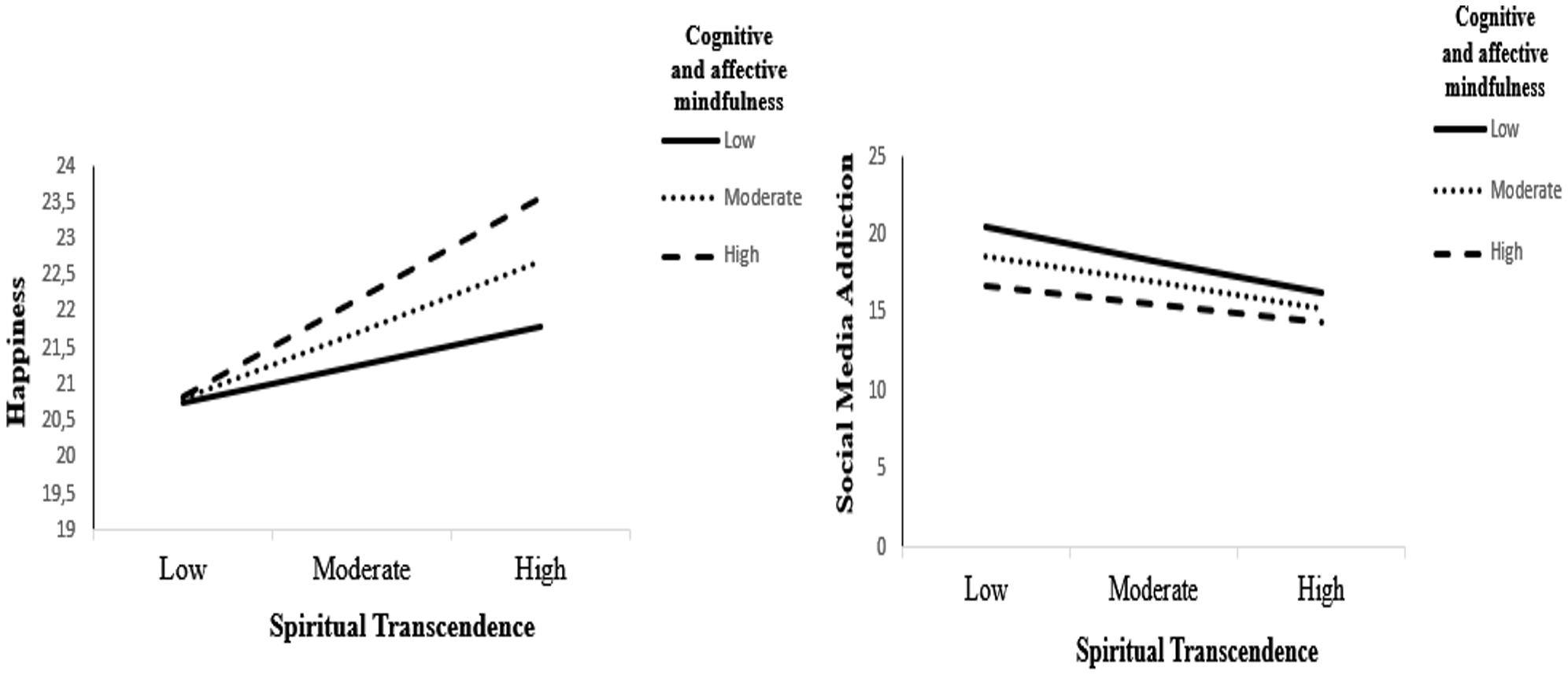
Lastly, the present study investigated the interaction between spiritual transcendence and cognitive affective mindfulness in predicting happiness, at 1 SD below the mean, at the mean, and 1 SD above, respectively. As can be seen in Table 4, the conditional effect of spiritual transcendence on happiness was significant across all levels of cognitive and affective mindfulness, indicating that it was significant at low levels (β = .0420, 95% CI = [.0057, .0738]), moderate levels (β = .0678, 95% CI = [.0408, .0948]), and high levels (β = .1107, 95% CI = [.0860, .1355]). Moreover, the conditional effect of spiritual transcendence on social media addiction was significant across all levels of cognitive and affective mindfulness, indicating that it was significant at low levels (β = -.1702, 95% CI = [-.2237, -.1166]), moderate levels (β = -.1414, 95% CI = [-.1819, -.1009]), and high levels (β = -.0934, 95% CI = [-.1321, .0547]). These results indicated that spiritual transcendence (via happiness) had a mediating effect on social media addiction, while cognitive and affective mindfulness had a moderating effect.
Discussion
The present study examined the (i) mediating effect of happiness in the relationship between spiritual transcendence and social media addiction and (ii) the moderating effect of cognitive and affective mindfulness in the relationship between transcendence and social media addiction. It also proposed a moderated mediation model to examine the moderating effect of cognitive and affective mindfulness between spiritual transcendence and happiness. The findings supported all six hypotheses (with the support for H1 to H3 being stronger than H4 to H6). The results showed a significant association between spiritual transcendence and happiness. However, due to the cross-sectional study design, the findings do not support a direct causal relationship in which spiritual transcendence significantly influenced happiness. Rather, the findings indicate that the variables showed significant relationships in the expected directions. Also, happiness had a significant negative association with social media addiction. The findings also showed that individuals who reported high levels of spiritual transcendence had higher levels of happiness and lower levels of social media addiction.
The study’s first key finding was that spiritual transcendence negatively predicted social media addiction. Spiritual transcendence is expressed as the ability of individuals to overcome their perceptions, goals, life difficulties, and feelings (İme et al., 2019). Previous studies have supported H1 (i.e., spiritual transcendence predicts social media addiction) (Almenayes, 2015). Foley et al. (2015) emphasized that the relationship between spirituality and social media use is an area that needs to be investigated. A few studies have found a significant negative relationship between social media addiction and spiritual transcendence (Demiroğlu & Taş, 2021). Another study reported that individuals with high spiritual well-being levels had low social media addiction scores (Wood et al., 2016). Wood et al. posited that those addicted to social media might have decreased specific aspects of their spirituality or that spirituality might enhance self-efficacy, resulting in less reliance on social media for meeting their psychological needs.
The study’s second hypothesis (H2: spiritual transcendence predicts happiness level) has been supported by many studies showing that spiritual transcendence is positively associated with happiness (e.g., Abdel-Khalek, 2007). More specifically, research conducted in Arab countries in the Middle East, Asia, and Africa have found that spiritual transcendence was significantly and positively correlated with happiness (Abdel-Khalek et al., 2019). Because the independent variable in the present study was spiritual transcendence, it is necessary to mention self-actualization because Maslow (2013) emphasized that there is self-actualization in the spiritual identity of individuals. Maslow (1969) also modified his model to place self-transcendence as a motivating step beyond self-actualization. Maslow later divided the top tier of the hierarchy of self-actualization needs to add self-transcendence and spiritual needs (Koltko-Rivera, 2006). Towards the end of his life, Maslow began to view spirituality as a higher level of self-actualization and an essential component of humanity (Maslow, 1969). As the humanistic approach emphasizes, how individuals achieve real happiness depends on how they progress in the hierarchy of needs. In a study conducted with individuals residing in different parts of the world (50% in the United States, 20% in Europe, and 15% in Türkiye), happiness levels were observed among those with high levels of self-actualization (Esat et al., 2021). These findings support those hypothesized in the present study (H2).
With the development of technology, many convenient and time-consuming platforms have entered people’s lives (e.g., social media platforms). Studies have reported a negative association between happiness and social media addiction (Erduran Tekin, 2025; Kozan et al., 2019). To explain the positive effect of happiness in reducing social media addiction, the characteristics that a happy individual must be known. For example, according to Myers and Diener (1995), the main features distinguishing happy individuals from unhappy individuals are high self-esteem, optimism, and extroversion. A previous study reported that extroversion negatively affected Facebook’s higher problematic use (Marino et al., 2016). In contrast, introversion has been positively associated with the problematic use of Twitter (Kircaburun, 2016). In addition, it has been reported that high self-esteem, another characteristic of happy individuals, is negatively associated with social media addiction (Koçak et al., 2021). Therefore, unhappy individuals may be at risk of becoming more addicted to social media than happy individuals. These studies support those of the present study (H3 – happiness predicts social media addiction).
Another finding in the present study was that the partial mediating effect of happiness was significant in the relationship between spiritual transcendence and social media addiction. Demiroğlu and Taş (2021) showed that individuals with high spiritual transcendence are less dependent on social media. However, it should be noted that the beta values obtained in the present study were small. Small beta values do not mean that the results necessarily contain strong or significant relationships, and therefore, caution should be exercised in interpreting the findings. In the present study, it was observed that happiness had a partial mediating effect on social media addiction. When individuals with high spiritual transcendence feel happy, their social media addiction is likely to decrease. However, the low effect size in this relationship indicates that the generalizability of the findings is limited.
One of the factors contributing to the partial mediating effect of happiness on social media addiction may be individuals’ sense of psychological superiority. Psychological superiority refers to the feeling of being better or more successful than others (Twenge & Campbell, 2009). Previous research suggests that individuals are happier when their self-actualization needs are fulfilled and that this increased happiness may reduce excessive social media use (Andreassen et al., 2017; Neubaum & Krämer, 2015; Ryff & Keyes, 1995; Satici, 2019). When individuals with a high spiritual transcendence feel happy, this is likely to reduce social media addiction. One study found that self-transcendence significantly predicted happiness (Dhillon, 2020), and another found that social anxiety, loneliness, and unhappiness were together predictors of social media addiction (Baltaci, 2019). Although there is no consensus in the literature, this finding supports the idea that lonely, socially anxious, and unhappy individuals are at greater risk of negative social media use.
Although spiritual transcendence is associated with happiness, the indirect pathway from spiritual transcendence to social media addiction via happiness may not be explained adequately due to a relatively small coefficient. The weak indirect pathway can be explained by focusing on the different relationships that individuals with high spiritual transcendence have with social media compared to those with low spiritual transcendence. Happiness may have an inhibiting effect on social media addiction, and the variable that appears to lead to this inhibiting effect is the spiritual transcendence of individuals. It is thought that individuals are happier when they fulfill self-actualization requirements. Individuals who feel happy are less likely to use social media problematically. Individuals seeking spiritual transcendence can engage in experiences such as prayer, connecting with nature, and participating in rituals that promote mental well-being, including finding meaning, purpose, and inner peace. It may help individuals with high spiritual transcendence use social media less and prevent the risk of addiction.
On the other hand, individuals with low spiritual transcendence may participate less in rituals that promote mental well-being and happiness, which may lead them to use social media problematically. Overall, increased spiritual transcendence promotes happiness, resulting in decreased social media addiction. These spiritual practices can help individuals reduce their time spent on social media and mitigate addiction. In this relationship, the mediating effect of the individual’s life satisfaction, contentment, joy, and generally positive emotions (i.e., happiness) may be the factors that prevent the path to social media addiction. Consequently, H4 was confirmed (i.e., that happiness would have a mediating effect on the relationship between spiritual transcendence and social media addiction).
The present study also found that cognitive and affective mindfulness moderated the relationship between spiritual transcendence and happiness. Here, mindfulness may have reinforced the positive effect of spiritual transcendence. It likely lowers the risk of social media addiction by facilitating happiness among individuals with medium and high levels of cognitive and affective mindfulness. This finding indicates that cognitive and affective mindfulness is a characteristic of personality that is associated with the happiness level of individuals. This finding suggests that cognitive and affective mindfulness are personality traits that are associated with individuals’ happiness levels. Individuals with moderate to high levels of cognitive and emotional mindfulness reported higher levels of happiness, suggesting that it is a protective factor in preventing social media addiction. Such individuals are likely to feel greater satisfaction with spiritual transcendence, which fulfills individual requirements. A study that supports these findings found positive relationships between cognitive mindfulness and subjective happiness (Dilmaç & Yılmaz, 2019). In the present study, it was found that the level of spiritual transcendence of individuals was directly associated with happiness and that cognitive and affective mindfulness had a moderating effect on the relationship. Consequently, H5 was confirmed (cognitive and affective mindfulness moderates spiritual transcendence and happiness).
The last important finding of the study was that cognitive and affective mindfulness moderated the relationship between spiritual transcendence and social media addiction. The identified relationship may be spurious because the beta values obtained were again low. It was found that the risk of social media addiction was higher when spiritual transcendence was lower among individuals with low cognitive and emotional awareness. This finding suggests that individuals’ high levels of spiritual transcendence and cognitive and affective mindfulness may facilitate less dependence on social media use due to its moderating effect. Additionally, the present study’s findings showed a statistically non-significant correlation between cognitive and emotional awareness and spiritual transcendence.
A previous study reported that individuals with social media addiction have low mindfulness levels (Charoensukmongkol, 2016). Another study observed that individuals with high cognitive and affective mindfulness also had high levels of spiritual transcendence (Verhaeghen, 2019). These findings suggest that cognitive and affective mindfulness play an important role in the relationship between spiritual transcendence and social media addiction. Cognitive mindfulness is used by cognitive behavioral therapists as an intervention to overcome addiction (Şenormancı et al., 2010). However, the low beta values obtained in the present study indicate that caution should be exercised regarding the strength of the relationship between cognitive and affective mindfulness and spiritual transcendence.
It is expected that individuals with high cognitive and affective mindfulness are less likely to spend excessive time on social media platforms. Mindfulness reflects individuals’ ability to focus on any activity they do and not be easily distracted by other things (Kabat-Zinn, 1990). Individuals addicted to social media have difficulty focusing on the present because they cannot control their impulses to access social media platforms. It has been reported that individuals with social media addiction have low mindfulness levels (Sriwilai & Charoensukmongkol, 2016). Individuals addicted to social media will be anxious if they cannot constantly check or update their status on social media sites (Andreassen et al., 2012). This situation can cause distraction and, therefore, decrease mindfulness. A study with Turkish participants reported that Facebook addiction was negatively related to mindfulness (Eşkisu et al., 2020).
Moreover, a different study reported the beneficial effect of mindfulness on stress caused by compulsive mobile social media use (Apaolaza et al., 2019). Other studies have reported that problematic social media use is negatively associated with mindfulness (Kircaburun et al., 2019). These findings are also associated with studies showing the positive effect of mindfulness on spirituality (Verhaeghen, 2019). Therefore, high levels of mindfulness and spiritual transcendence appear to positively reduce social media addiction among individuals. Consequently, H6 was confirmed (cognitive and affective mindfulness has a moderating effect on the relationship between spiritual transcendence and social media addiction).
Limitations, Strengths, and Future Research
As in all studies, the present study has some limitations. First, the study was cross-sectional, meaning causality between the study variables could not be determined. Therefore, longitudinal research studies are needed to provide insight into the causal relationships of the variables in the present study. In addition, data were collected from several universities using a non-probability sampling technique. Consequently, the generalizability of the present study’s findings to other age groups in and outside Türkiye is likely to be limited. A further limitation of this study is that it relied on self-report data, which can be subject to biases (e.g., social desirability and memory recall). Further research using a larger and more nationally representative sample would overcome these limitations. The online data were also collected during the COVID-19 pandemic. Individuals living in isolated communities may have naturally spent more time using social media than usual, which may have affected the findings. Also, during the pandemic, individuals’ happiness levels may have been lower than expected, and more time may have been spent on spiritual activities.
Despite these limitations, the data obtained from the structural model are valuable. Cognitive and affective mindfulness moderated the relationships between spiritual transcendence and happiness and between spiritual transcendence and social media addiction. This shows that the relationship between spiritual transcendence and social media addiction appears to be partially explained by happiness. Consequently, individuals with high levels of social media addiction have low levels of happiness, while individuals with spiritual transcendence have high levels of happiness. Moreover, evaluating social media addiction in terms of spiritual transcendence is another novel aspect of the research.
To further understand the relationship between applied spiritual development and happiness, future research could comprise larger-scale studies to comprehend the impact of spiritual practices on individuals’ happiness. When considering the role of mindfulness, more emphasis could be placed on varying levels of mindfulness among individuals highlighted in the present study. Research with individuals who have low levels of mindfulness may help to understand how these individuals perceive the relationship between spiritual development and happiness. Studies reviewing strategies for reducing social media addiction suggest a need for a better understanding of the positive impact of spiritual growth on decreasing social media addiction. In this context, meditation and mindfulness practices can boost individuals’ self-awareness, aiding and leading them to adopt a more conscious approach to their use of social media.
Such practices can lessen impulsive reactions during social media use, promoting healthier usage habits. Organizing programs that allow individuals to detach from social media by engaging in spiritual practices (such as prayer, chanting, meditation, yoga, spiritual counseling, connecting with nature, rituals, and celebrations) during specific intervals could be beneficial. Spiritual groups or communities provide opportunities for individuals to share the effects of social media usage collectively and offer mutual support. These environments facilitate opportunities for information exchange, sharing experiences, and learning strategies for healthy use. Spiritual practices can help individuals find inner peace and contentment, reducing the need for excessive social media use. Therefore, by promoting real-world relationships and engaging in social interactions, these practices may help individuals reduce their dependency levels on social media.
Regarding the combined use of mindfulness and spiritual development, studies could investigate how mindfulness and spiritual development can be used together and their joint role in reducing adverse effects, such as social media addiction. This could focus on developing approaches beneficial for both mental and spiritual well-being. Research on the relationship between practice and internal change could focus on practical applications of spiritual practices to better understand the relationship between individuals’ internal changes and increased happiness. This might involve investigating the impact of small changes made in daily life on individuals’ happiness.
Theoretical Implications and Practical Implications
The present study emphasizes the complex interaction between spiritual transcendence, cognitive and affective mindfulness, happiness, and their impact on social media addiction. According to the studies by Howard (2018) and Utomo and Marianta (2023), individuals with high levels of spiritual transcendence have lower levels of social media addiction than individuals with low levels of spiritual transcendence. While research exists on the relationship between social media addiction and spiritual transcendence, the absence of studies on the role of happiness and cognitive and affective mindfulness is a novel addition to the field. Consequently, using the findings of the study could help in the development of interventions promoting individuals’ attainment of spiritual transcendence, which may help reduce the adverse effects of social media addiction. Moreover, a significant negative relationship was found between happiness and social media addiction.
The negative association between happiness and social media addiction strengthens the broader discourse on the psychological consequences of excessive social media use (Kross et al., 2013). The present study adds further evidence that spiritual transcendence may have a significant effect on social media addiction. Moreover, happiness had a mediating role in this relationship. This finding highlights that the effectiveness of spiritual transcendence in promoting positive emotions may also contribute to reducing social media addiction. Additionally, mindfulness has different levels of effectiveness (i.e., moderation effects) in these relationships.
The moderating effect of cognitive and affective mindfulness in the relationship between spiritual transcendence and social media addiction is a novel addition to the extant literature, reflecting the importance of mindfulness-based interventions in preventing problematic social media use (Demiroğlu & Taş, 2021). Nevertheless, when happiness is included in the relationship between spiritual transcendence and social media addiction, the direct effect of core spiritual transcendence decreases. Furthermore, the moderating effect of cognitive and affective mindfulness in the relationship between spiritual transcendence and social media addiction was significant. Both the moderating role of cognitive and affective mindfulness and the mediating role of happiness address essential gaps in the literature regarding the impact of spiritual transcendence on social media addiction.
Even if an individual has a high level of spiritual transcendence, the impact of their spiritual experiences on pursuits in happiness might be limited if they lack affective and mental mindfulness. However, the presence of cognitive and affective mindfulness may assist in a more positive influence on the spiritual pursuit of happiness. The present study’s findings emphasize the need for a nuanced understanding of factors influencing social media addiction. Merely encouraging spiritual transcendence may not sufficiently address the complexity of excessive social media use. Instead, a comprehensive approach integrating cognitive and affective mindfulness strategies is crucial (Moqbel et al., 2023; Sriwilai & Charoensukmongkol, 2016). The findings indicate that spiritual transcendence alone may not adequately impact individuals’ problematic social media use and highlight the necessity of cognitive and affective mindfulness to prevent social media addiction.
Therefore, interventions to reduce social media addiction should promote spiritual transcendence and consider developing mindfulness strategies to achieve this goal. For example, psychoeducation programs can be used to foster spiritual transcendence, focusing on values, meaning, and nature. Additionally, practices such as digital detox and breathing exercises can be employed to cultivate mindfulness. This can increase individuals’ connection to the moment and distance them from the virtual reality offered by social media.
Acknowledgements
We sincerely thank all participants who dedicated their valuable time to this research and contributed to the data collection.
Ethical approval
This study was approved by the Ağrı İbrahim Çeçen University Scientific Research Ethics Committee (Date: February 22, 2023, Decision/Protocol No: E.34364). Informed consent was obtained from all participants involved in this study.
Data availability statement
The data that support the findings of this study are available from the corresponding author upon reasonable request.
Conflict of interest
The authors declare that this study was conducted in the absence of any commercial or financial relationships that could be construed as a potential conflict of interest.
Funding
The authors declare that this study received no funding.
Generative AI statement
The authors declare that no generative AI or AI-assisted technologies were used in the writing or preparation of this study.
References
- Abdel-Khalek, A. M. (2007). Religiosity, happiness, health, and psychopathology in a probability sample of Muslim adolescents. Mental Health, Religion & Culture, 10(6), 571-583. https://doi.org/
- Abdel-Khalek, A. M., Abdallah, T., & Al-Arja, N. (2019). Happiness and its relationship with well-being and religiosity among a sample of college students from Palestine. Arab Journal of Psychology, 4(1), 32-45. https://www.researchgate.net/publication/334194187
- Almenayes, J. J. (2015). Empirical analysis of religiosity as predictor of social media addiction. Journal of Arts and Humanities, 4(10), 44-52. https://doi.org/10.18533/journal.v4i10.826
- Andreassen, C. S., Pallesen, S., & Griffiths, M. D. (2017). The relationship between addictive use of social media, narcissism, and self-esteem: Findings from a large national survey. Addictive Behaviors, 64, 287-293. https://doi.org/10.1016/j.addbeh.2016.03.006
- Andreassen, C. S., Torsheim, T., Brunborg, G. S., & Pallesen, S. (2012). Development of a Facebook addiction scale. Psychological Reports, 110(2), 501-517. https://doi.org/10.2466/02.09.18.PR0.110.2.501-517
- Anli, G., & Bilgin, O. (2022). Serial multiple mediation of self-transcendence and psychological resilience in the relationship between fear of Covid-19 and subjective happiness in university students. Online Submission, 9(7), 84-99. https://doi.org/10.46827/ejes.v9i7.4359
- Apaolaza, V., Hartmann, P., D’Souza, C., & Gilsanz, A. (2019). Mindfulness, compulsive mobile social media use, and derived stress: The mediating roles of self-esteem and social anxiety. Cyberpsychology, Behavior, and Social Networking, 22(6), 388-396. https://doi.org/10.1089/cyber.2018.0681
- Argyle, M., Martin, M., & Crossland, J. (1989). Happiness as a function of personality and social encounters. In P. Forgas & J. M. Innes (Eds.), Recent advances in social psychology: An international perspective (pp. 189-203). Elsevier.
- Baltaci, Ö. (2019). The predictive relationships between the social media addiction and social anxiety, loneliness, and happiness. International Journal of Progressive Education, 15(4), 73-82. https://doi.org/10.29329/ijpe.2019.203.6
- Brown, K. W., & Cordon, S. (2009). Toward a phenomenology of mindfulness: Subjective experience and emotional correlates. In F. Didonna (Ed.), Clinical handbook of mindfulness (pp. 59-81). Springer.
- Cashen, M. (2012). The ugly, the lonely, and the lowly: Aristotle on happiness and the external goods. History of Philosophy Quarterly, 29(1), 1-19.
- Çatak, P. D. (2012). The Turkish version of the Cognitive and Affective Mindfulness Scale-Revised. Europe’s Journal of Psychology, 8(4), 603-619. https://doi.org/10.5964/ejop.v8i4.436
- Charoensukmongkol, P. (2016). Mindful Facebooking: The moderating role of mindfulness on the relationship between social media use intensity at work and burnout. Journal of Health Psychology, 21(9), 1966-1980. https://doi.org/10.1177/1359105315569096
- Chen, L., Yan, Z., Tang, W., Yang, F., Xie, X., & He, J. (2016). Mobile phone addiction levels and negative emotions among Chinese young adults: The mediating role of interpersonal problems. Computers in Human Behavior, 55, 856-866. https://doi.org/10.1016/j.chb.2015.10.030
- Choi, H. (2023). Effectuation processes of social media and student entrepreneurs in South Korea. Journal of Small Business Management, 61, 3077-3120. https://doi.org/10.1080/00472778.2021.1980218
- Cohen, J. (2013). Statistical power analysis for the behavioral sciences. Routledge. https://doi.org/10.4324/9780203771587
- Çokluk, Ö., Şekercioğlu, G., & Büyüköztürk, Ş. (2012). Sosyal bilimler için çok değişkenli istatistik: SPSS ve LISREL uygulamaları. Pegem.
- Çömlekçi, M. F., & Başol, O. (2019). Gençlerin sosyal medya kullanım amaçları ile sosyal medya bağımlılığı ilişkisinin incelenmesi. Celal Bayar Üniversitesi Sosyal Bilimler Dergisi, 17(4), 173-188. https://doi.org/10.18026/cbayarsos.525652
- Coo, C., & Salanova, M. (2018). Mindfulness can make you happy-and-productive: A mindfulness controlled trial and its effects on happiness, work engagement and performance. Journal of Happiness Studies, 19, 1691-1711. https://doi.org/10.1007/s10902-017-9892-8
- Cruz, C., Navarro, E., Pocinho, R., & Ferreira, A. (2016, November). Happiness in advanced adulthood and the elderly: the role of positive emotions, flourishing and mindfulness as well-being factors for successful aging. Proceedings of the Fourth International Conference on Technological Ecosystems for Enhancing Multiculturality (pp. 411-417). University of Salamanca. https://doi.org/10.1145/3012430.3012549
- Demir, Ö., & Doğanay, A. (2009). Bilişsel farkındalık becerilerinin geliştirilmesinde bilişsel koçluk yaklaşımı. Kuram ve Uygulamada Eğitim Yönetimi, 60(60), 601-624. https://dergipark.org.tr/en/pub/kuey/issue/10337/126670
- Demir, Y. (2021). Relationships among childhood experiences, happiness and social media addictions in adolescents. Educational Process: International Journal, 10(1), 13-27. https://doi.org/10.22521/edupij.2021.101.2
- Demiroğlu, B., & Taş, B. (2021). Relationship between spirituality and social media addiction among adults. Research on Education and Psychology, 5(2), 368-396. https://doi.org/10.54535/rep.1018548
- Dhillon, S. K. (2020). Empirical support of Wong’s self-transcendence spiral: Meaning in life, virtues and happiness. Wesleyan Journal of Research, 13(56), 17-28.
- Diener, E. (2000). Subjective well-being: The science of happiness and a proposal for a national index. American Psychologist, 55(1), 34-43. https://psycnet.apa.org/buy/2000-13324-004
- Diener, E. (2006). Happiness, life satisfaction, and fulfillment: The social psychology of subjective well-being. In P. A. M. Van Lange (Ed.), Bridging social psychology: Benefits of transdisciplinary approaches (pp. 313-318). Psychology Press.
- Dilmaç, B., & Yılmaz, M. (2019). Öğretmen adaylarında bilişsel farkındalık düzeyleri, öznel mutluluk ve sıkıntıyı tolere etme arasındaki yordayıcı ilişkiler. OPUS Uluslararası Toplum Araştırmaları Dergisi, 10(17), 1125-1155. https://doi.org/10.26466/opus.520293
- Dizen, M., Berenbaum, H., & Kerns, J. G. (2005). Emotional awareness and psychological needs. Cognition and Emotion, 19(8), 1140-1157. https://doi.org/10.1080/02699930500260468
- Doğan, M. (2014). Dinlerde ve islam kültüründe sabır. Recep Tayyip Erdoğan Üniversitesi İlahiyat Fakültesi Dergisi, 3(5), 93-130. https://dergipark.org.tr/en/pub/rteuifd/issue/28236/299771
- Doğan, T., & Çötok, N. A. (2011). Adaptation of the short form of the oxford happiness questionnaire into turkish: a validity and reliability study. Türk Psikolojik Danışma ve Rehberlik Dergisi, 4(36), 165-172. https://dergipark.org.tr/tr/download/article-file/200117
- Er, S., & Buzlu, S. (2022). The relationships between self-transcendence and depressive symptoms, self-esteem, and locus of control in individuals diagnosed with substance addiction. Perspectives in Psychiatric Care, 58(4), 2137-2144. https://doi.org/10.1111/ppc.13040
- Erduran Tekin, Ö. (2025). Rumination and social media addiction relationship: The role of loneliness and happiness. Journal of Social Service Research, 51, 1044-1056.
- Ergün, N., Özkan, Z., & Griffiths, M. D. (2025). Social media addiction and poor mental health: Examining the mediating roles of internet addiction and phubbing. Psychological Reports, 128(2), 723-743.
- Esat, G., Day, S., & Smith, B. H. (2021). Religiosity and happiness of Turkish-speaking Muslims: Does country happiness make a difference? Mental Health, Religion & Culture, 24(7), 713-727. https://doi.org/10.1080/13674676.2021.1926444
- Eşkisu, M., Çam, Z., Gelibolu, S., & Rasmussen, K. R. (2020). Trait mindfulness as a protective factor in connections between psychological issues and Facebook addiction among Turkish university students. Studia Psychologica, 62(3), 213-231. https://doi.org/10.31577/sp.2020.03.801
- Feldman, G., Hayes, A., Kumar, S., Greeson, J., & Laurenceau, J. P. (2007). Mindfulness and emotion regulation: The development and initial validation of the Cognitive and Affective Mindfulness Scale-Revised (CAMS-R). Journal of Psychopathology and Behavioral Assessment, 29(3), 177-190. https://doi.org/10.1007/s10862-006-9035-8
- Field, A. (2009). Discovering statistics using SPSS. Sage.
- Foley, N. M., O’Mahony, M., Lehane, E. A., Cil, T., & Corrigan, M. A. (2015). A qualitative content analysis of breast cancer narratives hosted through the medium of social media. British Journal of Medicine and Medical Research, 6(5), 474. https://doi.org/10.9734/BJMMR/2015/15309
- Fredrickson, B. L. (2004). The broaden-and-build theory of positive emotions. Philosophical transactions of the royal society of London. Series B: Biological Sciences, 359(1449), 1367-1377. https://doi.org/10.1098/rstb.2004.1512
- Garland, E. L., Hanley, A. W., Hudak, J., Nakamura, Y., & Froeliger, B. (2022). Mindfulness-induced endogenous theta stimulation occasions self-transcendence and inhibits addictive behavior. Science Advances, 8(41), eabo4455. https://doi.org/10.1126/sciadv.abo4455
- Gencer, N. (2018). Subjective well-being: A general overview. Hitit University Journal of Social Sciences Institute, 11(3), 2621-2638. https://doi.org/10.17218/hititsosbil.457382
- Griffiths, M. D., Kuss, D. J., & Demetrovics, Z. (2014).Social networking addiction: An overview of preliminary findings. In K. P. Rosenberg, & L. C. Feder (Eds.), Behavioral addictions: Criteria, evidence, and treatment (pp. 119-1141). Academic Press. https://doi.org/10.1016/B978-0-12-407724-9.00006-9
- Günüç, S. (2009). İnternet bağımlılık ölçeğinin geliştirilmesi ve bazı demografik değişkenler ile internet bağımlılığı arasındaki ilişkilerin incelenmesi (Thesis No. 234300) [Master’s thesis, Yüzüncü Yıl University]. Council of Higher Education National Thesis Center.
- Hayes, A. F. (2017). Introduction to mediation, moderation, and conditional process analysis: A regression-based approach. Guilford Publications.
- Herchenroeder, L., Norton, E. O., Hetelekides, E. M., Raeder, C. A., Henson, J. M., Bravo, A. J., & Norms, S. (2022). Delaying gratification’s role in the relationship between facets of mindfulness and substance use outcomes. Addictive Behaviors, 125, 107163. https://doi.org/10.1016/j.addbeh.2021.107163
- Hills, P., & Argyle, M. (2002). The Oxford Happiness Questionnaire: A compact scale for the measurement of psychological well-being. Personality and Individual Differences, 33(7), 1073-1082. https://doi.org/10.1016/S0191-8869(01)00213-6
- Howard, K. B. (2018). Mindfulness of emptiness: A paradoxical perspective on working with social networking site addiction (Publication No. 10937008) [Doctoral dissertation, Saybrook University]. ProQuest Dissertations & Theses Global.
- İme, Y., Ekşi, H., & Ekşi, F. (2019). Manevi aşkınlık ölçeği’nin türkçeye uyarlanması: Geçerlik ve güvenirlik çalışması. İnönü Üniversitesi Eğitim Fakültesi Dergisi, 20(3), 1008-1020. https://doi.org/10.17679/inuefd.562410
- James, C., Corman, H., Noonan, K., Reichman, N. E., & Jimenez, M. E. (2022). Adolescent chronic health conditions and school disconnectedness. Journal of Developmental & Behavioral Pediatrics, 43(2), 87-95. https://doi.org/10.1097/DBP.0000000000000987
- Johannsen, M., Nissen, E. R., Lundorff, M., & O’Toole, M. S. (2022). Mediators of acceptance and mindfulness-based therapies for anxiety and depression: A systematic review and meta-analysis. Clinical Psychology Review, 94, 102156. https://doi.org/10.1016/j.cpr.2022.102156
- Kabat-Zinn, J. (1990). Full catastrophe living: Using the wisdom of your body and mind to face stress, pain, and illness. Dell Publishing.
- Kabat-Zinn, J. (1994). Wherever you go, there you are: Mindfulness meditation in everyday life. Hachette UK.
- Kabat-Zinn, J. (2003). Mindfulness-based interventions in context: Past, present, and future. Clinical Psychology: Science & Practice, 10(2), 144-156. https://doi.org/10.1093/clipsy.bpg016
- Kaya, A., Şata, M., Türk, N., Özok, H. I., & Yıldırım, M. (2025). Reliability and validity of short-form generic scale of being phubbed and phubbing among Turkish adolescents and young adults. Journal of Technology in Behavioral Science, 10(1), 180-187. https://doi.org/10.1007/s41347-024-00428-4
- Kaya, A., Seyrek, E., Sarıgül, A., Sata, M., Gómez-Salgado, J., & Yıldırım, M. (2025). Social media addiction, perceived social support, sleep disorder, and job performance in healthcare professionals: Testing a moderated mediation model. International Journal of Mental Health Promotion, 27(8), 1149-1163. https://doi.org/10.32604/ijmhp.2025.067388
- Kemp, S. (2025). Digital 2025 July global statshot report. We Are Social. Retrieved September 11, 2025, from https://wearesocial.com/uk/blog/2025/07/digital-2025-july-global-statshot-report/
- Khan, N. A., Khan, A. N., & Moin, M. F. (2021). Self-regulation and social media addiction: A multi-wave data analysis in China. Technology in Society, 64, 101527. https://doi.org/10.1016/j.techsoc.2021.101527
- Kircaburun, K. (2016). Effects of gender and personality differences on Twitter addiction among Turkish undergraduates. Journal of Education and Practice, 7(24), 33-42.
- Kircaburun, K., Griffiths, M. D., & Billieux, J. (2019). Trait emotional intelligence and problematic online behaviors among adolescents: The mediating role of mindfulness, rumination, and depression. Personality and Individual Differences, 139, 208-213. https://doi.org/10.1016/j.paid.2018.11.024
- Koçak, O., İlme, E., & Younis, M. Z. (2021). Mediating role of satisfaction with life in the effect of self-esteem and education on social media addiction in Turkey. Sustainability, 13(16), 9097-10011. https://doi.org/10.3390/su13169097
- Koltko-Rivera, M. E. (2006). Rediscovering the later version of Maslow’s hierarchy of needs: Self-transcendence and opportunities for theory, research, and unification. Review of General Psychology, 10(4), 302-317. https://doi.org/10.1037/1089-2680.10.4.302
- Kozan, H. İ. Ö., Kavaklı, M., Ak, M., & Kesici, Ş. (2019). Akıllı telefon bağımlılığı, genel aidiyet ve mutluluk arasındaki ilişkilerin yapısal eşitlik modellemesi ile incelenmesi. Klinik Psikiyatri Dergisi, 22(4), 2152-2159. https://doi.org/10.33206/mjss.874013
- Kross, E., Verduyn, P., Demiralp, E., Park, J., Lee, D. S., Lin, N., & Ybarra, O. (2013). Facebook use predicts declines in subjective well-being in young adults. PloS One, 8(8), e69841. https://doi.org/10.1371/journal.pone.0069841
- Kumar, S. M. (2002). An introduction to Buddhism for the cognitive-behavioral therapist. Cognitive and Behavioral Practice, 9(1), 40-43. https://doi.org/10.1016/S1077-7229(02)80038-4
- Kuss, D. J., & Griffiths, M. D. (2011). Online social networking and addiction - a review of the psychological literature. International Journal of Environmental Research and Public Health, 8(9), 3528-3552. https://doi.org/10.3390/ijerph8093528
- Kuss, D. J., & Griffiths, M. D. (2017). Social networking sites and addiction: Ten lessons learned. International Journal of Environmental Research and Public Health, 14(3), 311. https://doi.org/10.3390/ijerph14030311
- Kuyken, W., Watkins, E., Holden, E., White, K., Taylor, R. S., Byford, S., & Dalgleish, T. (2010). How does mindfulness-based cognitive therapy work? Behaviour Research and Therapy, 48(11), 1105-1112. https://doi.org/10.1016/j.brat.2010.08.003
- Lyubomirsky, S. (2007). The how of happiness, A scientific approach to getting the life you want. The Penguin Press.
- Marino, C., Vieno, A., Pastore, M., Albery, I. P., Frings, D., & Spada, M. M. (2016). Modeling the contribution of personality, social identity and social norms to problematic Facebook use in adolescents. Addictive Behaviors, 63, 51-56. https://doi.org/10.1016/j.addbeh.2016.07.001
- Martin, J. A., Ericson, M., Berwaldt, A., Stephens, E. D., & Briner, L. (2023). Effects of two online positive psychology and meditation programs on persistent self-transcendence. Psychology of Consciousness: Theory, Research, and Practice, 10(3), 225. https://doi.org/10.1037/cns0000286
- Maslow, A. H. (1969). The farther reaches of human nature. Journal of Transpersonal Psychology, 1(1), 1-9.
- Maslow, A. H. (2013). Toward a psychology of being. Simon and Schuster.
- McClelland, M., Geldhof, J., Morrison, F., Gestsdóttir, S., Cameron, C., Bowers, E., Duckworth, A., Little, T., Grammer, J. (2018). Self-regulation. In N. Halfon, C. B. Forrest, R. M. Lerner, & E. M. Faustman (Eds.), Handbook of life course health development. Springer. https://doi.org/10.1007/978-3-319-47143-3_12
- Moqbel, M., Alshare, K., Erskine, M. A., & Bartelt, V. (2023). WhatsApp social media addiction and mental health: mindfulness and healing use interventions. Behaviour & Information Technology, 43(11), 2511-2524. https://doi.org/10.1080/0144929x.2023.2253932
- Mortezabeigi, Z., Safari, A., Bozorgkhoo, Z., & Farid, A. A. (2022). Predicting the happiness based on self-efficacy and quality of life by mediating of psychological well-being. Journal of the Iranian Institute for Health Sciences Research, 21(1), 47-57. https://doi.org/10.52547/payesh.21.1.47
- Myers, D., & Diener, E. (1995). Who is happy. American Psychological Society, 1, 1-19. https://doi.org/10.1111/j.1467-9280.1995.tb00298.x
- Neubaum, G., & Krämer, N. C. (2015). My friends right next to me: A laboratory investigation on predictors and consequences of experiencing social closeness on social networking sites. Cyberpsychology, Behavior, and Social Networking, 18(8), 443-449. https://doi.org/10.1089/cyber.2014.0613
- Özok, H. I., Kaya, A., Dinçer, R. E., & Yıldırım, M. (2025). Associations between social appearance anxiety, problematic social media use, selfitis behavior, and adaptable self: A moderated-mediation model. Psihologija, 59(1), 93-109. https://doi.org/10.2298/PSI231025014O
- Piedmont, R. L. (1999). Does spirituality represent the sixth factor of personality? Spiritual transcendence and the five-factor model. Journal of Personality, 67(6), 985-1013. https://doi.org/10.1037/0893-164X.18.3.213
- Piedmont, R. L., & Leach, M. M. (2002). Cross-cultural generalizability of the Spiritual Transcendence Scale in India: Spirituality as a universal aspect of human experience. American Behavioral Scientist, 45(12), 1888-1901. https://doi.org/10.1177/0002764202045012011
- Piedmont, R. L., Wilkins, T. A., & Hollowitz, J. (2013). The relevance of spiritual transcendence in a consumer economy: The dollars and sense of it. Journal of Social Research & Policy, 4(2), 59-77.
- Pittman, M., & Reich, B. (2016). Social media and loneliness: Why an Instagram picture may be worth more than a thousand Twitter words. Computers in Human Behavior, 62, 155-167. https://doi.org/10.1016/j.chb.2016.03.084
- Preacher, K. J., & Hayes, A. F. (2008). Asymptotic and resampling strategies for assessing and comparing indirect effects in multiple mediator models. Behavior Research Methods, 40(3), 879-891. https://doi.org/10.3758/BRM.40.3.879
- Roy, A. K., Bowirrat, A., Smith, D. E., Braverman, E. R., Jalali, R., Badgaiyan, R. D., Baron, D., Llanos-Gomez, L., Barh, D., & Blum, K. (2021). Neurobiology and spirituality in addiction recovery. Acta Scientific Neurology, 4(9), 64-71.
- Ryff, C. D., & Keyes, C. L. M. (1995). The structure of psychological well-being revisited. Journal of Personality and Social Psychology, 69(4), 719-727. https://doi.org/10.1037/0022-3514.69.4.719
- Sa’dudin, I. (2020), Tuhfetü’l-mürsele’deki bireysel-aşkın tasavvufi değerlerin sosyo-ampirik değere göre yeniden uyumlanması (S. Yıldız, Trans.). Academic Platform Journal of Islamic Researches 4(1), 93-98. https://dergipark.org.tr/en/pub/apjir/issue/53718/707085
- Şata, M. (2020). Nicel araştırma yaklaşımları. In E. Oğuz (Ed.), Eğitimde araştırma yöntemleri (pp. 77-97). Eğiten Kitap.
- Satici, S. A. (2019). Facebook addiction and subjective well-being: A study of the mediating role of shyness and loneliness. International Journal of Mental Health and Addiction, 17(1), 41-55. https://doi.org/10.1007/s11469-017-9862-8
- Sechi, C., Loi, G., & Cabras, C. (2021). Addictive internet behaviors: The role of trait emotional intelligence, self-esteem, age, and gender. Scandinavian Journal of Psychology, 62(3), 409-417. https://doi.org/10.1111/sjop.12698
- Şenormancı, Ö., Konkan, R., & Sungur, M. Z. (2010). İnternet bağımlılığı ve bilişsel davranışçı terapisi. Psychiatry, 11, 261-268.
- Shonin, E., Van Gordon, W., & Griffiths, M. D. (2013). Buddhist philosophy for the treatment of problem gambling. Journal of Behavioral Addictions, 2(2), 63-71. https://doi.org/10.1556/jba.2.2013.001
- Sriwilai, K., & Charoensukmongkol, P. (2016). Face it, don’t Facebook it: Impacts of social media addiction on mindfulness, coping strategies and the consequence on emotional exhaustion. Stress and Health, 32(4), 427-434. https://doi.org/10.1002/smi.2637
- Sun, X., Duan, C., Niu, G., Tian, Y., & Zhang, Y. (2021). Mindfulness buffers the influence of stress on cue-induced craving for internet among Chinese colleges with problematic internet use. Journal of Behavioral Addictions, 10(4), 983-989. https://doi.org/10.1556/2006.2021.00080
- Tran, K., Gunturu, S., & Korenis, P. (2022). Neurobiological process of addiction. In E. Akerele (Ed.), Substance and non-substance related addictions (pp. 125-128). Springer. https://doi.org/10.1007/978-3-030-84834-7_9
- Türk, N., Batmaz, H., Kaya, A., & Yıldırım, M. (2025). Mediating role of loneliness in the relationship between digital game addiction and phubbing in adolescents. Psihologija, 1-18. https://doi.org/10.2298/PSI230308035T
- Twenge, J. M., & Campbell, W. K. (2009). The narcissism epidemic: Living in the age of entitlement. Simon and Schuster.
- Utomo, K. D. M., & Marianta, Y. I. W. (2023). The role of social support and spiritual well-being in predicting internet addiction among indonesian seminarians. Pastoral Psychology, 1-16. https://doi.org/10.1007/s11089-023-01088-6
- Verhaeghen, P. (2019). The mindfulness manifold: Exploring how self-preoccupation, self-compassion, and self-transcendence translate mindfulness into positive psychological outcomes. Mindfulness, 10(1), 131-145. https://doi.org/10.1007/s12671-018-0959-3
- Wartberg, L., Kriston, L., & Thomasius, R. (2020). Internet gaming disorder and problematic social media use in a representative sample of German adolescents: Prevalence estimates, comorbid depressive symptoms, and related psychosocial aspects. Computers in Human Behavior, 103, 31-36. https://doi.org/10.1016/j.chb.2019.09.014
- Wood, M., Center, H., & Parenteau, S. C. (2016). Social media addiction and psychological adjustment: Religiosity and spirituality in the age of social media. Mental Health, Religion & Culture, 19(9), 972-983. https://doi.org/10.1080/13674676.2017.1300791
- Yilmaz, R., & Karaoglan Yilmaz, F. G. (2023). Problematic internet use in adults: The role of happiness, psychological resilience, dispositional hope, and self-control and self-management. Journal of Rational-Emotive & Cognitive-Behavior Therapy, 41(3), 727-745. https://doi.org/10.1007/s10942-022-00482-y
- Zendle, D., & Bowden-Jones, H. (2019). Is excessive use of social media an addiction? BMJ, 365, l2171. https://doi.org/10.1136/bmj.l2171
License
Copyright (c) 2026 The Author(s). This is an open access article distributed under the Creative Commons Attribution License (CC BY), which permits unrestricted use, distribution, and reproduction in any medium or format, provided the original work is properly cited.