

Abstract
Drug abuse can be defined as the use of drugs in a manner that deviates from medical prescription. The negative effects of drug addiction are well known globally, and millions are estimated to suffer from drug use disorders and require treatment services. In Malaysia, recent studies have shown that the great majority of drug users are young adolescents. This trend has now spread to schools and has caused a significant rise in cases of drug abuse annually. Unfortunately, to date, there are no recent data regarding the prevalence of drug and substance abuse amongst school-going adolescents in Malaysia. This study aims to assess the rising prevalence of drug abuse among school-going adolescents in Malaysia through a nationwide representative survey. A total of 3,382 secondary school students participated in this study. They were selected from hotspot areas in Malaysia using a multistage stratified cluster sampling technique. The data were collected through face-to-face interviews, assisted by school counsellors. The Alcohol, Smoking, and Substance Involvement Screening Test (ASSIST) was utilized to measure the frequency of drug use according to type, and the adolescents’ involvement in drug abuse and drug-related behavior. Descriptive analysis was conducted using the Statistical Package for Social Sciences to determine the prevalence of drug abuse among the students. The prevalence of current drug abuse among the adolescent students was found to be 3.9 % for those who had used drugs in the past 30 days. Meanwhile, lifetime use was found to be 9.6%. The most popular drugs used were kratom (Mitragyna speciosa), followed by hallucinogens and cannabis. Most drug users were male students, and the average onset age of drug use was 16. Special attention and urgent action from relevant agencies are thus needed to address this critical issue in the country.
Keywords: prevalence, substance and drug abuse, school going adolescent, drug hotspot
Main Points
- Implement school-based programs on the risks of substances like kratom and hallucinogens, focusing on areas with high adolescent abuse. Tailor campaigns to the local socio-cultural context for greater impact.
- Involve local communities in hotspot areas to tackle environmental factors influencing drug access. Collaborate with leaders, parents, and youth groups to create drug-free zones and awareness initiatives.
- Enforce stricter regulations on kratom cultivation, distribution, and sales. Increase penalties for illegal activities and enhance surveillance in hotspot areas to reduce availability.
- Address socioeconomic disparities by supporting adolescents from low-income families. Implement policies to improve education access, employment for parents, and community resources to reduce the risk of drug abuse.
Introduction
Drug abuse refers to sporadic and excessive use of drugs in violation of medical advice. It involves the use of psychoactive drugs to the extent that they interfere with an individual’s physical health, social relationships, or vocational functioning (Ismail et al., 2022). Drug abuse has now become a menace to world health and a major health problem, especially among adolescents (Nawi et al., 2021), due mainly to peer influence and thrill seeking in pursuit of deceptive pleasure and happiness. The curiosity factor on the first trial produces irresistible pleasure and excitement that motivates the individual to perpetuate the abuse (Ismail et al., 2023).
The study of the epidemiology of substance use is critical to establish a baseline for sound policy measures. Several national and regional research studies have contributed to a better understanding of drug use patterns among adolescents (European Monitoring Centre for Drugs and Drug Addiction, 2021; Kanato et al., 2021; Miech et al., 2021). Past research has established that drug-abusing adolescents are typically at the age of onset (Ander et al., 2020; Sharapova et al., 2020), and that earlier onset is associated with an elevated risk of developing dependence (Jordan & Andersen, 2017). The ages of 12-14 and 15-17 were found to be critical for the initiation of drug abuse, especially psychoactive drugs. The tendency became more significant among adolescents aged 18-26 years (UNODC, 2018).
Youth is the most transitional phase in an individual’s life, characterized by abrupt physiological and behavioral changes, which may involve various risky behaviors and lifestyles (Ajzen & Manstead, 2007). This risky behavior leads to both long-term and short-term implications, such as chronic health and psychosocial issues (Schauer et al., 2020). Smaller yet a non-negligible percentage of adolescents, with single or dominant use of one substance, may similarly transition to co-use or multiple substances when entering young adulthood (Choi et al., 2018).
A recent nationwide survey in Malaysia, involving 11,129,316 youths aged 15-40 years, revealed that the prevalence of drug substance use among lifetime users was 5.5%, while for those who had taken drugs in the past 30 days or who currently use them, the rate was 3.5%. This is significantly lower than that previously reported in 2019, when a total of 142,199 individuals were engaged in drug abuse, indicating an 8.7% rise from the previous year (Agensi Antidadah Kebangsaan Kementerian Dalam Negeri, 2019). Indeed, the high percentage of drug users among adolescents is disconcerting since they are considered our future leaders and hope for the country (Ismail et al., 2023).
There are various risk factors that can contribute to adolescents’ involvement in drug abuse. Rebellious traits (Guttmannova et al., 2018), lack of religiosity (Afifi et al., 2019), parental negligence (El Kazdouh et al., 2018), peer pressure (Osborne et al., 2020), and lack of knowledge on the dangers of drugs (Shafini et al., 2022) are all known risk factors associated with drug abuse. Nonetheless, research on the prevalence rate of drug abuse among adolescents is rather limited, both in Malaysia and abroad, since studies mainly focus on aspects such as the self and environment.
In Malaysia, comprehensive research on adolescents’ drug abuse is insufficient and the existing studies have primarily focused on epidemiological aspects rather than delving into drug addiction (Ismail et al., 2022). Consequently, the findings may not fully represent the current situation of drug abuse among adolescents, and we expect that adolescents living in hotspot areas will be at a higher risk of involvement in drug abuse. Past studies have established that residing in hotspot areas is an important risk factor for adolescents who engage in drug-related activities (Ismail, 2017; Nawi et al., 2021). In recent times, the significance of spatial analysis has gained considerable importance, particularly in the examination of violence and criminal activities (Santana-Airis et al., 2021). Studying drug-related hotspot areas enables researchers to pinpoint the social, economic, and environmental elements that lead to drug abuse activities. This insight should assist policymakers and public health experts in addressing the fundamental triggers of drug abuse.
Drug abuse statistics often show higher occurrence rates in drug-related hotspot areas due to the interplay of various factors that foster an environment conducive to the misuse of drugs. In hotspot areas, proximity to distribution networks often leads to increased accessibility to drugs, making it more convenient for individuals to acquire illicit drugs. The influence of peer pressure and social networks holds substantial sway over drug abuse. In hotspot areas, where drug use could be more acceptable among specific peer circles, individuals might be more inclined to engage in drug trials and experimentation. This situation is of deep concern since drug problems among adolescents are frequently linked with specific problems such as truancy (Jedynak & Motyka, 2020), early dropout (Breslau et al., 2011), and other delinquent issues (Anderberg et al., 2022).
Hence, to gain deeper insight into drug use issues, it is crucial to closely monitor the increasing statistics of drug abuse among school-going adolescents. In-depth research is therefore needed to determine the prevalence of drug involvement, especially among youths, in terms of the onset stage (Ismail, 2017), since data accuracy and availability are two vital factors that are essential for policy-related developments that aim for curbing drug abuse. This study hypothesized that the rate of prevalence of drug use in hotspot areas would be higher compared to other areas due to the risk factors explained above. Gaining insights into the local context and the underlying factors driving drug abuse paves the way for formulating prevention strategies that precisely cater to the distinctive needs of the community.
Method
Study Setting
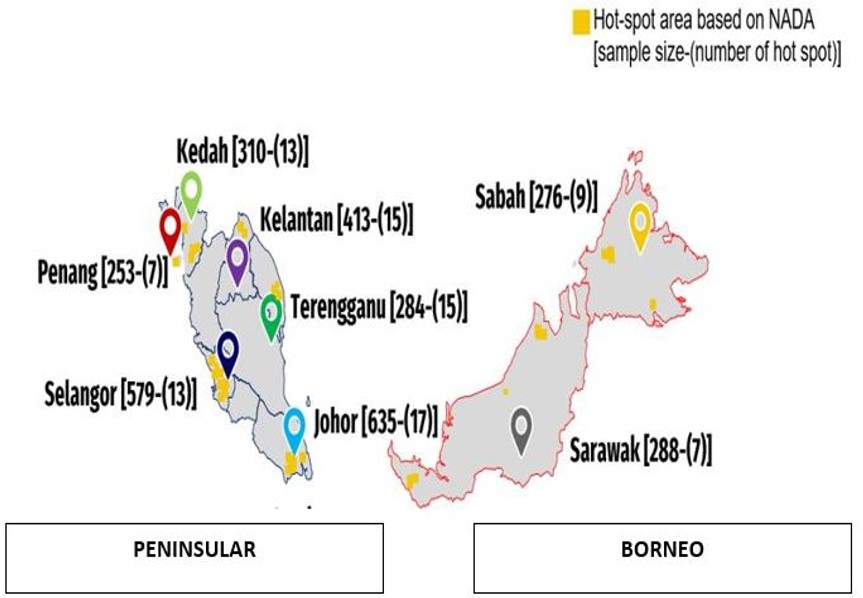
A cross-sectional survey was conducted on randomly selected participants from gazetted hotspot areas in Malaysia, as identified by the National Anti-Drugs Agency (NADA, 2021) as shown in Figure 1. Data were collected through face-to-face interviews using structured questionnaires. The study, which took place from December 2021 to December 2022, involved school-going adolescents aged 13 to 19 from 85 randomly selected schools under the Ministry of Education. These schools were chosen based on a list provided by the ministry, and the survey encompassed eight states, with district-level drug hotspots identified by NADA. A total of 3,382 adolescents participated (Malaysia, aged 13-19, attending school, having parental consent for those under 18, no major physical or mental illnesses, and proficiency in reading and writing in the national language), with parental or guardian consent.
Ethical Approval and Informed Consent
The study was approved by the Ethics Committee of the Secretariat of Research Ethics, Universiti Kebangsaan Malaysia, PPI/111/8/JEP-2020-174(2). Written consent was provided by each eligible participant, and parental consent was obtained for those aged below 18 years.
Data Collection
Researchers and enumerators underwent training at a university in Malaysia. COVID-19 fieldwork safety protocols and the government’s standard operating procedures (SOP) for data collection in educational settings were followed. Data were collected through face-to-face interviews using a set of questionnaires in designated school rooms. To ensure sample representativeness, multistage stratified cluster sampling was employed. The sample size was determined using a single proportion method, adjusting for target population size, design effect, and a 30% non-response rate, resulting in a minimum sample size of 1,096 respondents for a 4.7% prevalence. A total of 3,382 adolescents from 85 schools across eight Malaysia states, including drug hotspot areas, voluntarily participated, with parental or guardian consent.
Measure
Substance use - The present study used the Alcohol, Smoking, and Substance Involvement Screening Test (ASSIST) which was developed to measure drug and substance use. The screening tool was developed to track and control the symptoms of use (Ali et al., 2021). Items included types of drug use, frequency, prevalence related to drug use patterns (both lifetime and current use), and level of risk of drug use or dependency. To simplify the description of the prevalence of drugs and substances in Malaysia, respondents were classified as “current users” if they responded “yes” to the question on whether they ever use drugs and substances and reported this use within the last 30 days. Meanwhile, those who responded “no” to recent 30-day use (last use being a month ago, a year ago, or only having used once or twice in their lifetime) were classified as “lifetime users.” Poly-substance and poly-drug users were respondents who admitted to or screened positive for multiple substances, whereas mono-substance and mono-drug users were those who were tested for only a single substance. Tobacco products, alcohol, marijuana, cocaine, stimulants, inhalants, sedatives, hallucinogens, opiate drugs, and other substances (to be stated by participants) were included in the screening tool.
Other variables - Demographic information was obtained from standard items used in past research in Malaysia. The information included age, gender, ethnicity, religion, age of onset, sources of substance providers, residency, parents’ occupation, and family economic status.
Data Processing and Analysis
Data were analyzed using the Statistical Package for the Social Sciences (SPSS) software version 27. Data on substance use and socio-demographic characteristics were extracted from the raw data and displayed as frequencies, percentages, and critical intervals for categorical variables. This approach was based on previous studies, as the researchers used descriptive analysis to determine prevalence rates (Ismail et al., 2022).
Result
Participant Socio-Demographic Characteristics
As shown in Table 1, the total number of respondents was 3,382, where most of the participants were from Malaysia (73.2%). There was an approximately equal proportion of urban (48.3%) and rural (51.7%) respondents. Their mothers were either working (50.4%) or unemployed (49.7%). More than half of respondents were male (71.7%), Malay (74.5%), and lived in landed property (81.4%) in a community for 10 or more years (69.6%). Most of the respondents liked school (94.0%), had no history of disciplinary offences (95.3%), and had parents who were living together (80.1%), with an employed father (87.7%) and a B40 family income (86.0%).
| SD: standard deviation, MYR: Malaysian Ringgit, USD: United States Dollar | ||
| Table 1. Socio-demographic characteristics of respondents (n = 3382 | ||
| Information |
|
|
| State | ||
| Peninsular Malaysia |
|
|
| Sabah |
|
|
| Sarawak |
|
|
| Locality | ||
| Rural |
|
|
| Urban |
|
|
| Age | ||
| 13 years old |
|
|
| 14 years old |
|
|
| 15 years old |
|
|
| 16 years old |
|
|
| 17 years old |
|
|
| 18 years old |
|
|
| Gender | ||
| Male |
|
|
| Female |
|
|
| Race | ||
| Malay |
|
|
| Chinese |
|
|
| Indian |
|
|
| Bumiputera Sabah & Sarawak |
|
|
| Type of house | ||
| Landed property |
|
|
| Shared property |
|
|
| Years living in that Community | ||
| ≤ 9 years |
|
|
| ≥ 10 years |
|
|
| Like School | ||
| Yes |
|
|
| No |
|
|
| Change School due to Disciplinary Offences | ||
| Yes |
|
|
| No |
|
|
| Parental Relationship Status | ||
| Living together |
|
|
| Divorce |
|
|
| Not living together |
|
|
| One of them has died |
|
|
| Father’s Job | ||
| Employed |
|
|
| Unemployed |
|
|
| Mother’s Job | ||
| Employed |
|
|
| Unemployed |
|
|
| Income Classification | ||
| B40 (<MYR4850/USD 1155) |
|
|
| M40 (MYR4850/ USD 1155 - MYR10,970/ USD 2612) |
|
|
| T20 (>MYR10,970/ USD 2612) |
|
|
Prevalence of Substance and Drug Use
The prevalence of current mono-substance use was 19.0% (n=643) for tobacco and 3.4% (n=116) for alcohol, as explained in Figure 2. Meanwhile, the prevalence of lifetime mono-substance use of tobacco was 15.8% (n=964) and alcohol was 8.0% (n=272), as shown in Figure 3.
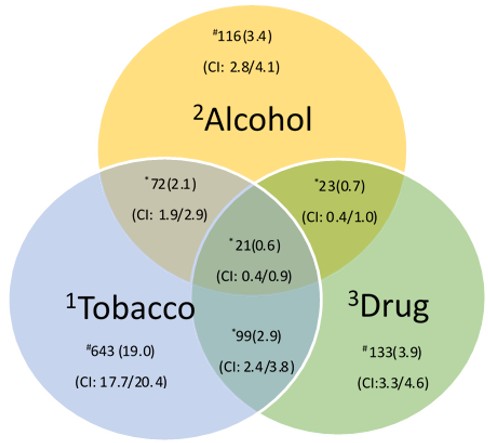
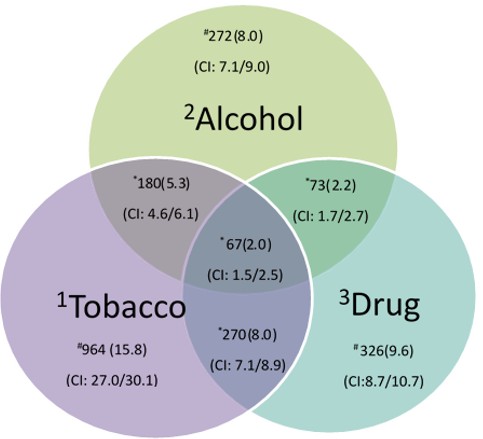
1Cigarette, Chewing Tobacco, Cigars, etc. 2 Beers, Wine, Liquor, etc. 3 Cannabis, Pot, Grass, Hash, Coke, Crack, Speed, Meth, Ecstasy, Nitrous, Glue, Gasoline, Paint Thinner, Diazepam, Alprazolam, Midazolam, LSD, Acid, Mushrooms, Thrips, Ketamine, Heroin, Morphine, Methadone, Buprenorphine, Codeine, Kratom, Depressant, Dissociative and etc. CI: Confident Interval 95% (Minimum/Maximum)
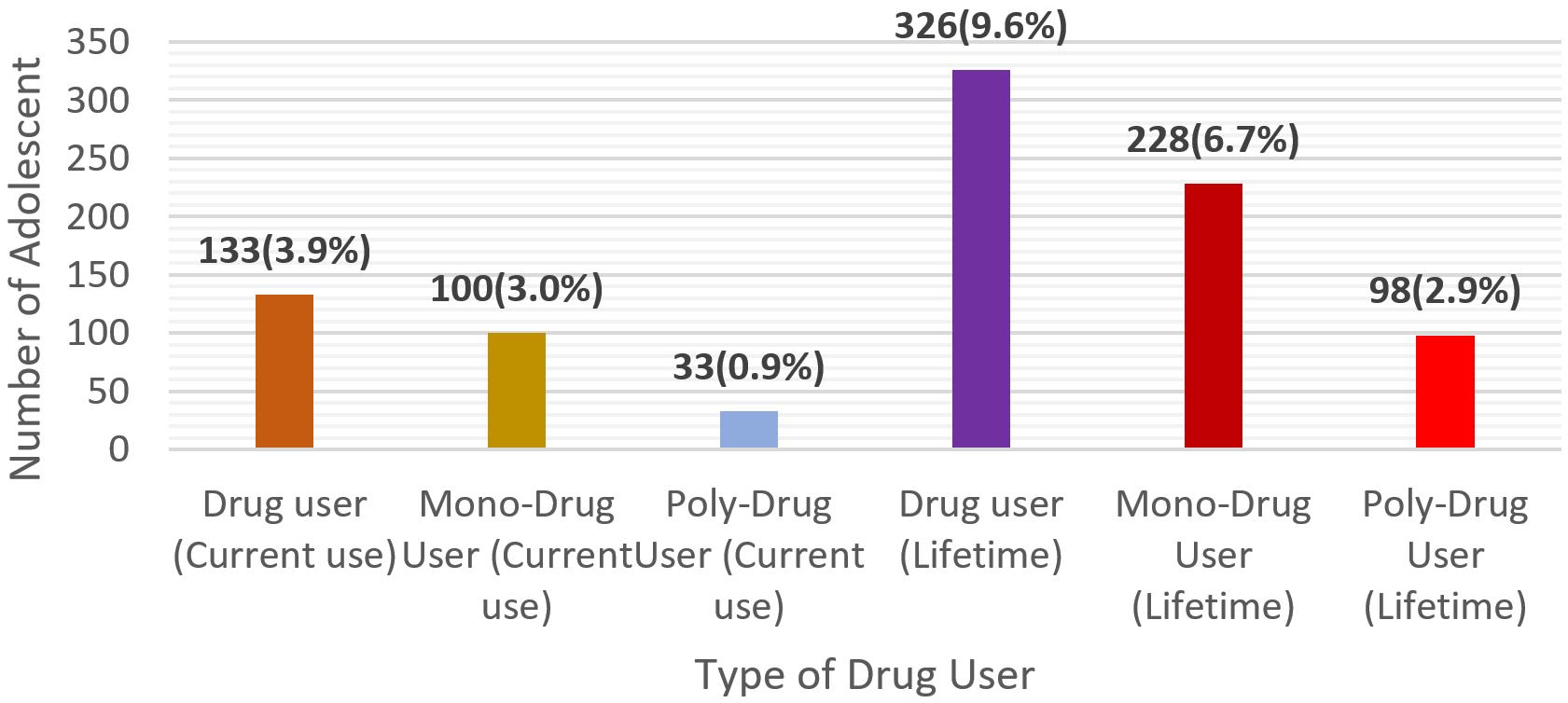
The prevalence of current drug use among the school-going adolescents was 3.9% (n=133), with 3.0% (n=100) being mono-drug users and 0.9% (n=33) classified as poly-drug users, respectively. Meanwhile, the prevalence of lifetime drug use is 9.6%, (n=326) with 6.7% (228) being mono-drug users and 2.9% (n=98) being poly-drug users, as shown in Figure 4.
The prevalence of current poly-substance use involving both tobacco and drugs was 2.9% (n=99), followed by tobacco and alcohol at 2.1% (n=72), alcohol and drugs at 0.7% (n=23), and finally the combination of tobacco, alcohol, and drugs at 0.6% (21), as shown in Figure 3. On the other hand, the lifetime prevalence of poly-substance use involving both tobacco and drugs was 8.0% (n=270), followed by tobacco and alcohol at 5.3% (n=180), alcohol and drugs at 2.3% (n=73) and finally tobacco, alcohol, and drugs at 2.0% (n=67) (Figure 4).
Details of drug users are presented in Table 2. Among those who reported current and lifetime usage, the most frequently mentioned substances for current use were kratom (2.8%) and hallucinogens (1.2%), followed by sedatives (0.6%) and cannabis (0.5%). Kratom had the highest prevalence rate for lifetime use (5.8%), followed by hallucinogens (3.3%), cannabis (1.9%), and sedatives (0.9%).
Prevalence of Polydrug Use
Table 3 and Table 4 show the prevalence of school-going adolescents who were either current or lifetime users, respectively. The current drug use data indicated that the majority of adolescents were using hallucinogens and other substances (kratom) at a rate of 0.38%. This was followed by the combination of cannabis and other substances (kratom) at 0.98%, cannabis and ATS at 0.21%, and cannabis and sedatives at 0.21%.
| Table 3. Prevalence of dual drug use for current users (n = 3382) | ||||||||
| Type of Drug |
|
|
|
|
|
|
|
|
| Cannabis |
|
|||||||
| Cocaine |
|
|
||||||
| ATS |
|
|
|
|||||
| Solvents/Inhalants |
|
|
|
|
||||
| Sedatives or sleeping pills |
|
|
|
|
|
|||
| Hallucinogens |
|
|
|
|
|
|
||
| Opiates |
|
|
|
|
|
|
|
|
| Others |
|
|
|
|
|
|
|
|
| Table 4. Prevalence of dual drug use for lifetime users (n = 3382) | ||||||||
| Type of Drug |
|
|
|
|
|
|
|
|
| Cannabis |
|
|||||||
| Cocaine |
|
|
||||||
| ATS |
|
|
|
|||||
| Solvents/Inhalants |
|
|
|
|
||||
| Sedatives or sleeping pills |
|
|
|
|
|
|||
| Hallucinogens |
|
|
|
|
|
|
||
| Opiates |
|
|
|
|
|
|
|
|
| Others |
|
|
|
|
|
|
|
|
Meanwhile, the lifetime user data revealed that most adolescents, about 1.27%, had tried hallucinogens in combination with kratom, followed by cannabis and kratom at 0.98%, cannabis and hallucinogens at 0.74%, and a mix of sedatives with hallucinogens at 0.47%.
Prevalence of Drug Use Based on Sociodemographic Factors
This section discusses the prevalence of drug use based on demographic factors, including gender, age, and parental income.
Prevalence Rate by Gender
Table 5 details the prevalence of current and lifetime use of tobacco, alcohol, and drugs by gender. Among school-going adolescents, the prevalence of current use of tobacco, alcohol, and drugs was 3.9% (n=133). Of these, 3.58% (n=121) were males, and 0.35% (n=12) were females. The prevalence of lifetime use of tobacco, alcohol, and drugs was at 1.98%, with 1.83% (n=62) among males and 0.15% (n=5) among females.
| Table 5. Prevalence of drug use based on sociodemographic factors (n = 3382) | |||||
| Type |
|
|
|
||
|
|
|
|
|
||
|
|
|||||
| Tobacco, alcohol and drug user |
|
|
|
|
|
|
|
|
|
|
|
|
| Drug user |
|
|
|
|
|
|
|
|
|
|
|
|
| Mono-drug |
|
|
|
|
|
| Poly-drug |
|
|
|
|
|
| Mono-drug |
|
|
|
|
|
| Poly-drug |
|
|
|
|
|
|
|
|||||
| Tobacco, alcohol and drug user |
|
|
|
|
|
|
|
|
|
|
|
|
|
|
|
|
|
|
|
|
|
|
|
|
|
|
|
|
|
|
|
|
|
|
|
|
|
|
|
|
| Drug user |
|
|
|
|
|
|
|
|
|
|
|
|
|
|
|
|
|
|
|
|
|
|
|
|
|
|
|
|
|
|
|
|
|
|
|
|
|
|
|
|
| Mono-drug |
|
|
|
|
|
| Poly-drug |
|
|
|
|
|
| Mono-drug |
|
|
|
|
|
| Poly-drug |
|
|
|
|
|
| Mono-drug |
|
|
|
|
|
| Poly-drug |
|
|
|
|
|
| Mono-drug |
|
|
|
|
|
| Poly-drug |
|
|
|
|
|
| Mono-drug |
|
|
|
|
|
| Poly-drug |
|
|
|
|
|
| Mono-drug |
|
|
|
|
|
| Poly-drug |
|
|
|
|
|
|
|
|||||
| Tobacco, alcohol and drug user |
|
|
|
|
|
|
|
|
|
|
|
|
|
|
|
|
|
|
|
| Drug user |
|
|
|
|
|
|
|
|
|
|
|
|
|
|
|
|
|
|
|
| Mono-drug |
|
|
|
|
|
| Poly-drug |
|
|
|
|
|
| Mono-drug |
|
|
|
|
|
| Poly-drug |
|
|
|
|
|
| Mono-drug |
|
|
|
|
|
| Poly-drug |
|
|
|
|
|
The prevalence of current drug use among male school-going adolescents was 3.58%, with 2.72% (n=92) mono-drugs and 0.86% (n=29) poly-drugs. In comparison, the prevalence of current drug use among female adolescents was 0.35% (n=12), with use rates of 0.24% (n=8) for mono-drugs and 0.11% (n=4) on poly-drugs.
The prevalence of lifetime drug use among the school-going male adolescents was 8.9%, with mono-drug and poly-drug users at 8.9% (n=302) and 2.7% (n=90), respectively. Lifetime use among female adolescents was 0.7% (n=24), with mono-drug and poly-drug use at 0.5% (n=16) and 0.2% (n=8), respectively.
Prevalence Rate by Age
Table 5 illustrates the prevalence of current and lifetime drug use by age. The prevalence of current use of tobacco, alcohol, and drugs among school-going adolescents was 0.71%, with the majority aged 16 years (0.27%). The prevalence of lifetime use of tobacco, alcohol, and drugs among school-going adolescents was 0.71%, with the majority aged 16 to 17 years.
The prevalence of current drug use among school-going adolescents was 3.9%, distributed as follows: 13 years old (0.12%), 14 years old (0.18%), 15 years old (0.68%), 16 years old (1.92%), 17 years old (1.01%), 18 years old (0.03%). The highest prevalence of poly-drug use was among 16-year-olds (0.56%), followed by 13 and 15-year-olds (0.09%), and 14-year-olds (0.06%).
Among lifetime drug users, prevalence varied by age as follows; 13 years old (0.3%), 14 years old (0.6%), 15 years old (1.9%), 16 years old (4.3%), 17 years old (2.5%), 18 years old (0.1%). The highest prevalence of poly-drug use was among 16-year-olds (1.21%), followed by 15-year-olds (0.47%), 14-year-olds (0.12%), and 13-year-olds (0.09%).
Prevalence Rate by Socioeconomic Status (SES)
Table 5 shows the prevalence of current and lifetime drug use according to socioeconomic status (SES). The prevalence of current use of tobacco, alcohol, and drugs among school-going adolescents was 0.56% in B40 and 0.06% in M40. The prevalence of drug use was 3.9%, with 3.49% in B40, 0.35% in M40, and 0.09% in T20. The prevalence of lifetime use of tobacco, alcohol, and drugs was 1.71% in B40, 0.21% in M40, and 0.06% in T20. Meanwhile, the prevalence of drug use among school-going adolescents was 9.6%, comprising 8.6% in B40, 0.9% in M40, and 0.1% in T20.
Prevalence of Drug Use Based on Location
This section discusses the prevalence of drug use based on demographic factors, including location and state.
Prevalence Rate by State
Table 6 shows the prevalence of current and lifetime use of tobacco, alcohol, and drugs across states. Among school-going adolescents, the prevalence of current use of tobacco, alcohol, and drugs was 0.24 % in Peninsular Malaysia, 0.24% in the Borneo Region of Malaysia (Sabah), and 0.15% in Sarawak. The prevalence of lifetime use of tobacco, alcohol, and drugs among these adolescents was 0.56% in Peninsular Region of Malaysia, 0.89% in Sabah, and 0.53% in Sarawak.
| Table 6. Prevalence of drug use based on location (n = 3382) | |||||
| Type | Location |
|
|
||
|
|
|
|
|
||
|
|
|||||
| Tobacco, alcohol and drug user | Peninsular Malaysia |
|
|
|
|
| Sabah |
|
|
|
|
|
| Sarawak |
|
|
|
|
|
| Drug user | Peninsular Malaysia |
|
|
|
|
| Sabah |
|
|
|
|
|
| Sarawak |
|
|
|
|
|
| Mono-drug | Peninsular Malaysia |
|
|
|
|
| Poly-drug |
|
|
|
|
|
| Mono-drug | Sabah |
|
|
|
|
| Poly-drug |
|
|
|
|
|
| Mono-drug | Sarawak |
|
|
|
|
| Poly-drug |
|
|
|
|
|
|
|
|||||
| Tobacco, alcohol and drug user | Rural |
|
|
|
|
| Urban |
|
|
|
|
|
| Drug user | Rural |
|
|
|
|
| Urban |
|
|
|
|
|
| Mono-drug | Rural |
|
|
|
|
| Poly-drug |
|
|
|
|
|
| Mono-drug | Urban |
|
|
|
|
| Poly-drug |
|
|
|
|
|
The prevalence of current drug use among school-going adolescents was 2.19% in Peninsular Malaysia, 1.25% in Sabah, and 0.50% in Sarawak In Peninsular Malaysia, the prevalence of mono-drug use was 1.60%, while poly-drug use was 0.59%. Meanwhile, in Sabah, the prevalence of mono-drug and poly-drug use was 0.95% and 0.30%, respectively. Lastly, in Sarawak, the prevalence of mono-drug use was 0.41% and poly-drug use was 0.09Sarawak%.
The prevalence of lifetime drug use among school-going adolescents was 5.4% in Peninsular Malaysia, 3.1% in Sabah, and 1.1% in Sarawak. The prevalence of mono-drug and poly-drug users was 3.9% and 1.5% respectively, in Peninsular Malaysia. Meanwhile, the prevalence of mono-drug and poly-drug users in Sabah were 2.2% and 0.9%, respectivelySabah. Lastly, the prevalence of mono-drug and poly-drug users were 0.7% and 0.4%, respectively, in Sarawak.
Prevalence Rate by Region
Table 6 shows the prevalence of current and lifetime use of tobacco, alcohol, and drugs by region. The prevalence of current use of tobacco, alcohol, and drugs among school-going adolescents was 0.15% (n=5) in rural areas and 0.47% (n=16) in urban areas. Similarly, the prevalence of lifetime use of these substances was 0.68% (n=23) in rural areas and 1.30% (n=44) in urban areas.
The prevalence of current drug use among the respondents was 2.07% (n=70) in rural areas and 1.86% (n=63) in urban areas. In rural areas, the prevalence of mono-drug and poly-drug use was 1.57% (n=53) and 0.50% (n=17), respectively. In urban areas, the prevalence of mono-drug use and poly-drug use was 1.39% (n=47) and 0.47% (n=16), respectively.
The prevalence of lifetime drug use among school-going adolescents was 4.4% (n=151) in rural areas and 5.2% (n=175) in urban areas. The prevalence of mono-drug and poly-drug use was 3.0% (n=100) and 1.5% (n=51) in rural areas. The prevalence of mono-drug and poly-drug use was 3.8% (n=128) and 1.4% (n=47) in urban areas.
Drug Information
Drug Information comprises the source of drugs, expenses, and age at onset of drug use.
Source of Drug
There were four main sources of drugs among school-going adolescents (Table 7); namely friends, neighbors, family members, and pushers. The respondents obtained drugs for current and lifetime use mainly from friends, followed by pushers/dealers, family members, and neighbors.
| MYR: Country Malaysian Ringgit | ||||
| Table 7. Drug information | ||||
| Item |
|
|
||
|
|
|
|
|
|
|
|
||||
| Friends |
|
|
|
|
| Neighbor |
|
|
|
|
| Family |
|
|
|
|
| Pusher |
|
|
|
|
|
|
||||
| MYR1-MYR20 |
|
|
|
|
| MYR21-MYR50 |
|
|
|
|
| MYR51-MYR100 |
|
|
|
|
| MYR101-MYR200 |
|
|
|
|
| > MYR200 |
|
|
|
|
|
|
||||
| No information |
|
|
|
|
| 7 years old |
|
|
|
|
| 8 years old |
|
|
|
|
| 10 years old |
|
|
|
|
| 11 years old |
|
|
|
|
| 12 years old |
|
|
|
|
| 13 years old |
|
|
|
|
Drug Expenses
Table 7 shows drug expenses incurred by school-going adolescents. The majority of current and lifetime users spent MYR1- MYR20, followed by MYR21-MYR50, MYR51-MYR100, MYR101-MYR200, with the fewest spending more than MYR200.
Age at Onset of Drug Use
The majority of school-going adolescents were about 15 years old (16.87%) at the onset of drug use, for both current and lifetime use. The next highest was the 16-year-old group, followed by the 14 and 13-year-olds (Table 7).
Drug’s Influence
There were seven influences on drug use: current and lifetime drug users were mainly influenced into addiction by seven factors (Table 8); friends, family, neighbors, community, ineffective laws, social media, and personal choice. The four most influential factors, in descending order, were friends, personal choice, social media, and family.
| Table 8. Drug's influence | ||
| Information |
|
|
|
|
|
|
| Friend |
|
|
| Family |
|
|
| Neighbours |
|
|
| Community |
|
|
| Ineffective laws |
|
|
| Social media |
|
|
| Own choice |
|
|
Discussion
Summary of core findings and comparisons with existing literature
Drug abuse is a crucial social issue of our age. Accordingly, the main purpose of this study was to determine the prevalence of drug and substance abuse among school-going adolescents aged 13 to 19 years in selected hotspot areas in Malaysia. We found that a total of 9.6% of the respondents admitted to misuse of drugs in their lifetime, and almost half of them (3.9%) reported being current users. The results show a higher prevalence than those previously reported by the National Health and Morbidity Survey (NHMS) in 2017 among adolescents aged 13-17 years. The NHMS report showed that the prevalence of lifetime drug use was 4.3% (Institute for Public Health, 2020b). A lower prevalence was also reported in an earlier study conducted in Malaysia (Rodzlan Hasani et al., 2021).
Our findings reveal that adolescents in Malaysia predominantly use kratom and hallucinogens, which contrasts with the Institute for Public Health Country Malaysia (IPH) report, which identifies cannabis as the most used drug among adolescents (Institute for Public Health, 2020a). However, for current drug use, our survey aligns with the IPH, with kratom being the most frequently used substance in the past 30 days. This trend can be attributed to the accessibility and affordability of kratom among adolescent students. Notably, kratom’s ease of cultivation by users contributes to its widespread availability. In recent years, kratom has become a popular psychotropic substance, with its global cultivation on the rise (Yusoff et al., 2014). Furthermore, users often perceive kratom as a legal high, offering a cheaper and perceived safer alternative to other opioids (Hamid et al., 2016).
Our study, which began in June 2020 coinciding with the government’s phased reopening of schools after the COVID-19 pandemic, hypothesized that the disruption of adolescents’ routines during the school closures may have contributed to psychological distress, potentially increasing drug use. The global slowdown during the pandemic affected populations in various ways (Ali et al., 2021). Substantial evidence supports this connection. A US study using national data found a significant correlation between COVID-19 isolation and rising substance misuse (Patrick et al., 2022). Additionally, the Centers for Disease Control and Prevention (CDC) reported a 13% increase in drug use in recent years, attributing the surge to the emotional stress caused by the pandemic (Czeisler et al., 2020).
We accordingly conducted this study in pandemic hotspot areas that were gazetted by the National Anti-drugs Agency of Malaysia. According to Chainey and Ratcliffe (2005), a hotspot is a geographical location with a greater-than-normal concentration of an event or a cluster. The hotspots in this study were selected areas where drug activities were prominent and occurred frequently. Living in a hotspot area has also been identified as a contributing factor to the increasing trend of illicit substance abuse in general. Ismail (2017) emphasized that adolescents, particularly those living in identified hotspot areas of drugs, are more vulnerable to the impact and risk of drug abuse. The high prevalence found in this study may be due to differences in norms in the hotspot environment (Kortteinen, 2008). Daily and early exposures to high-risk situations such as drug misuse may contribute to adolescents’ vulnerability (Shafie et al., 2023). This is further exacerbated when adolescents lack knowledge and skills for coping with such challenges.
In addition, the pandemic resulted in significant disruptions to students’ daily lives, including intermittent school closures, reduced peer interactions, and heightened levels of stress and uncertainty. These changes may have impacted students’ drug-taking behaviors, either by increasing substance use as a coping mechanism or decreasing use due to limited social opportunities and restricted access.
The availability and accessibility of drugs, particularly in hotspot neighborhoods, significantly contribute to the high prevalence of drug abuse. Previous studies have emphasized neighborhood influence as a key factor. In Malaysia, adolescents are especially vulnerable due to peer pressure and the community environment (Sulaiman & Zainuddin, 2021). Ramli (2012) also identified neighborhood influence as a risk factor among prisoners with drug addiction. A 2007 Bureau of Justice Statistics report revealed that 22% of students in grades 9 to 12 had been offered, sold, or given illegal drugs at school, heightening their exposure and risk of future abuse (Tam & Foo, 2012).
Similarly, Broman (2016) highlighted that drug availability in communities plays a crucial role in later drug use. Despite this, our study found lower prevalence rates compared to Western countries such as the United States (Substance Abuse and Mental Health Services Administration, 2020) and Norway (Heradstveit et al., 2020). Drug misuse may be at odds with local cultural and religious norms, particularly in Muslim communities (Ismail et al., 2022). However, the legalization of cannabis in certain countries may influence perceptions of drug use among local adolescents, even though evidence suggests its harmful effects (Sefa & Ali, 2020).
Study Limitations and Recommendations
There are several limitations that we identified in this study. This study involved school-going adolescents aged between 13 and 19 years, who may not be forthright in their responses about drug use for fear of disciplinary action if they admit any involvement. As such, the prevalence rates reported here may not be entirely accurate. For similar reasons, some of the participants were also hesitant to disclose the truth about their past experiences and were unable to communicate effectively about what they were requested to share, particularly regarding drug-related activities in the past. In addition, some may be fearful and thus distrustful that the information provided may be detrimental to them. With this cognizance, we suggest that similar studies should be conducted in a more general setting and not be limited to school-going adolescents. By including adolescents from various backgrounds, for example non-schoolers or those outside the formal education setting, future studies can provide a more representative and comprehensive picture of the prevalence of drug abuse among adolescents. This way, we can identify different risks and protective factors that may influence drug abuse patterns among adolescents in the general population.
Conclusion
This study discovered a higher prevalence rate of drug abuse among adolescents compared to that previously reported in Malaysia. Our findings also found that kratom, hallucinogens, and cannabis are the most used substances among adolescents in Malaysia. Further research is necessary to elucidate and understand the trends in the use of these substances, especially hallucinogens, which we found to be closely associated with the use of e-cigarettes. Availability, accessibility, individual and community perceptions, and customary practices (cultural and faith-based) are possible factors that influence substance use across different localities and ethnic groups. Hence, policy measures must consider these socio-demographic variations in their prevention and treatment efforts. This study further draws attention to the urgent need to enhance existing intervention programs, drug-related policies, and educational programs to reduce drug abuse among adolescents in Malaysia.
Acknowledgements
The authors acknowledge the Ministry of Higher Education Malaysia and the Universiti Kebangsaan Malaysia, (UKM) for funding this study under the Long-Term Research Grant Scheme-(LGRS/1/2019/UKM-UKM/2/1). We also thank the team for their commitment and tireless efforts in ensuring that the manuscript was well executed.
Ethical approval
This study was approved by the Ethics Committee of the Secretariat of Research Ethics Universiti Kebangsaan Malaysia (Date: March 23, 2020, Decision/Protocol No: PPI/111/8/JEP-2020-174(2).). Informed consent was obtained from all participants involved in this study.
Data availability statement
The data that support the findings of this study are available from the corresponding author upon reasonable request.
Conflict of interest
The authors declare that this study was conducted in the absence of any commercial or financial relationships that could be construed as a potential conflict of interest.
Funding
This study was supported by the Ministry of Higher Education, Malaysia under Grant Number LRGS/1/2019/UKM-UKM/2/1.
Generative AI statement
The authors declare that no generative AI or AI-assisted technologies were used in the writing or preparation of this study.
References
- Afifi, R. A., El Asmar, K., Bteddini, D., Assi, M., Yassin, N., Bitar, S., & Ghandour, L. (2019). Bullying victimization and use of substances in high school: Does religiosity moderate the association? Journal of Religion and Health, 59(1), 334-350. https://doi.org/10.1007/s10943-019-00789-8
- Agensi Antidadah Kebangsaan Kementerian Dalam Negeri. (2019). Maklumat dadah 2019. https://online.anyflip.com/jxfni/vzzz/mobile/index.html
- Ajzen, I., & Manstead, A. S. (2007). Changing health-related behaviours: An approach based on the theory of planned behaviour. In The scope of social psychology (pp. 55-76). Psychology Press. https://doi.org/10.4324/9780203965245-10
- Ali, F., Russell, C., Nafeh, F., Rehm, J., LeBlanc, S., & Elton-Marshall, T. (2021). Changes in substance supply and use characteristics among people who use drugs (PWUD) during the COVID-19 global pandemic: A national qualitative assessment in Canada. International Journal of Drug Policy, 93, 103237. https://doi.org/10.1016/j.drugpo.2021.103237
- Ander, B., Fransson, E. I., Bergnehr, D., & Gerdner, A. (2020). Onset of substance use among early adolescents in Sweden. Journal of Social Work Practice in the Addictions, 20(2), 105-121. https://doi.org/10.1080/1533256X.2020.1748973
- Anderberg, M., Dahlberg, M., Wennberg, P. (2022). Criminality among young people with substance use problems in Sweden: A one-year follow-up study. Journal of Drug Issues, 52(3), 406-420. https://doi.org/10.1177/00220426211046596
- Breslau, J., Miller, E., Joanie Chung, W.-J., & Schweitzer, J. B. (2011). Childhood and adolescent onset psychiatric disorders, substance use, and failure to graduate high school on time. Journal of Psychiatric Research, 45(3), 295-301. https://doi.org/10.1016/j.jpsychires.2010.06.014
- Broman, C. L. (2016). The availability of substances in adolescence: Influences in emerging adulthood. Journal of Child & Adolescent Substance Abuse, 25(5), 487-495. https://doi.org/10.1080/1067828x.2015.1103346
- Chainey, S., & Ratcliffe, J. (2005). GIS and crime mapping. Wiley. https://doi.org/10.1002/9781118685181
- Choi, H. J., Lu, Y., Schulte, M., & Temple, J. R. (2018). Adolescent substance use: Latent class and transition analysis. Addictive Behaviors, 77, 160-165. https://doi.org/10.1016/j.addbeh.2017.09.022
- Czeisler, M. É., Lane, R. I., Petrosky, E., Wiley, J. F., Christensen, A., Njai, R., Weaver, M. D., Robbins, R., Facer-Childs, E. R., Barger, L. K., Czeisler, C. A., Howard, M. E., & Rajaratnam, S. M. W. (2020). Mental health, substance use, and suicidal ideation during the COVID-19 pandemic - United States, June 24-30, 2020. MMWR. Morbidity and Mortality Weekly Report, 69(32), 1049-1057. https://doi.org/10.15585/mmwr.mm6932a1
- El Kazdouh, H., El-Ammari, A., Bouftini, S., El Fakir, S., & El Achhab, Y. (2018). Adolescents, parents and teachers’ perceptions of risk and protective factors of substance use in Moroccan adolescents: A qualitative study. Substance Abuse Treatment, Prevention, and Policy, 13(1), 31. https://doi.org/10.1186/s13011-018-0169-y
- European Monitoring Centre for Drugs and Drug Addiction. (2021). European drug report 2021: Trends and developments. Publications Office. https://doi.org/10.2810/18539
- Guttmannova, K., Skinner, M. L., Oesterle, S., White, H. R., Catalano, R. F., & Hawkins, J. D. (2018). The interplay between marijuana-specific risk factors and marijuana use over the course of adolescence. Prevention Science, 20(2), 235-245. https://doi.org/10.1007/s11121-018-0882-9
- Hamid, R. T., Andrew, C. B., Ishraq, K. K., Arjamon D., & John, N. G. (2016). Kratom: A new product in an expanding substance abuse market. Federal Practitioner, 33(11), 32-36.
- Heradstveit, O., Skogen, J. C., Edland-Gryt, M., Hesse, M., Vallentin-Holbech, L., Lønning, K.-J., & Sivertsen, B. (2020). Self-reported illicit drug use among Norwegian University and college students. Associations With Age, Gender, and Geography. Frontiers in Psychiatry, 11. https://doi.org/10.3389/fpsyt.2020.543507
- Institute for Public Health. (2020a). National Health and Morbidity Survey (NHMS) 2019: Vol. I. NCDs—non-communicable diseases: Risk factors and other health problems. http://www.iku.gov.my/nhms-2019
- Institute for Public Health. (2020b). The National Health and Morbidity 2019. In Institute for public health. https://iku.gov.my/nhms-2019
- Ismail, R. (2017). Pengaruh Faktor Individu, Keluarga dan Persekitaran Sosial Terhadap Tingkah Laku Penyalahgunaan Bahan dalam Kalangan Remaja. Akademika, 87(1), 7-16. https://doi.org/10.17576/akad-2017-8701-01
- Ismail, R., Manaf, M. R. A., Hassan, M. R., Nawi, A. M., Ibrahim, N., Lyndon, N., Amit, N., Zakaria, E., Razak, M. A. A., Nor, N. I. Z., Shukor, M. S., & Kamarubahrin, A. F. (2022). Prevalence of drug and substance use among Malaysian youth: A nationwide survey. International Journal of Environmental Research and Public Health, 19(8), 4684. https://doi.org/10.3390/ijerph19084684
- Ismail, R., Mohammed Nawi, A., Abdul Manaf, M. R., Hassan, M. R., Mohd, H. A., Ibrahim, N., Tan Abdullah, I. H., & Shukor, S. (2023). Risk and protective factors in predicting drug and substance abuse among Malaysian youths. Addicta: The Turkish Journal on Addictions, 10(1), 23-33. https://doi.org/10.5152/addicta.2023.22086
- Jedynak, W., & Motyka, M. A. (2020). Drug use predictors identified in the school environment. Canadian Journal of Family and Youth, 12(1), 163-177. https://doi.org/10.29173/cjfy29496
- Jordan, C. J., & Andersen, S. L. (2017). Sensitive periods of substance abuse: Early risk for the transition to dependence. Developmental Cognitive Neuroscience, 25, 29-44. https://doi.org/10.1016/J.DCN.2016.10.004
- Kanato, M., Sarasiri, R., & Leyatikul, P. (2021). ASEAN Drug Monitoring Report 2020. Bangkok: ASEAN Narcotics Cooperation Center. https://asean.org/wp-content/uploads/2022/03/ADM-Report-2020_2021Nov02.pdf
- Kortteinen, S. (2008). Negotiating etnic identities: Alcohol as a social marker in East and West Malaysia. Akademika, 72, 25-44.
- Miech, R. A., Johnston, L. D., O’malley, P. M., Bachman, J. G., Schulenberg, J. E., & Patrick, M. E. (2021). Monitoring the future national survey results on drug use, 1975-2020. Volume I, secondary school students. Institute for Social Research. https://doi.org/10.3998/2027.42/150622
- NADA. (2021). NADA strategic plan 2021. https://www.aadk.gov.my/en/policies-acts-circulars/aadk-strategic-plan-2021-2025/
- Nawi, A. M., Ismail, R., Ibrahim, F., Hassan, M. R., Manaf, M. R. A., Amit, N., Ibrahim, N., & Shafurdin, N. S. (2021). Risk and protective factors of drug abuse among adolescents: A systematic review. BMC Public Health, 21(1), 2088. https://doi.org/10.1186/s12889-021-11906-2
- Osborne, V., Serdarevic, M., Striley, C. W., Nixon, S. J., Winterstein, A. G., & Cottler, L. B. (2020). Age of first use of prescription opioids and prescription opioid non-medical use among older adolescents. Substance Use & Misuse Journal, 55(14), 2420-2427. https://doi.org/10.1080/10826084.2020.1823420
- Patrick, M. E., Parks, M. J., Fairlie, A. M., Kreski, N. T., Keyes, K. M., & Miech, R. (2022). Using substances to cope with the COVID-19 pandemic: U.S. National data at age 19 years. Journal of Adolescent Health, 70(2), 340-344. https://doi.org/10.1016/j.jadohealth.2021.11.006
- Ramli, W. S. W. (2012). Pengaruh psikososial dan tahap pengetahuan bahaya dadah terhadap penagihan semula dalam kalangan banduan penagih dadah penjara Malaysia. Retrieved July 25, 2019, from http://etd.uum.edu.my/3266/4/WAN_SALMI_WAN_RAMLI.pdf
- Rodzlan Hasani, W. S., Saminathan, T. A., Ab Majid, N. L., Miaw Yn, J. L., Mat Rifin, H., Abd Hamid, H. A., Robert Lourdes, T. G., Ahmad, A., lsmail, H., Rashid, R. A., & Mohd Yusoff, M. F. (2021). Polysubstance use among adolescents in Malaysia: Findings from the National Health and Morbidity Survey 2017. PLOS ONE, 16(1), e0245593. https://doi.org/10.1371/journal.pone.0245593
- Santana-Airis, R., George, T. S., Padron-Salas, A., Sanjuan-Meza X. S., Landeros- Olvera, E A. & Cossio-Torres, P. E. (2021). The relationship between density of drug outlets, crime hot spots and family factors on the consumption of drugs and delinquent behavior of male adolescent Mexican students. Social Science & Medicine, 279, 113985. https://doi.org/10.1016/j.amepre.2020.05.020
- Schauer, G. L., Clayton, H. B., Njai, R., & Grant, A. M. (2020). Adolescent marijuana use and related risk behaviors, national findings from 2015 to 2017. American Journal of Preventive Medicine, 59(5), 714-724. https://doi.org/10.1016/j.amepre.2020.05.020
- Sefa, B., & Ali, C. U. (2020). Adolescents and marijuana: Its prevalence, underpinning causes, effects and implications on the next generation. International Journal of Psychology and Counselling, 12(3), 45-52. https://doi.org/10.5897/ijpc2020.0609
- Shafie, A. A.-H., Othman, K., Baharudin, D. F., Mohamad Yasin, N., Amat, S., Mohd Jaladin, R. A., Rahimi, M. K. A., Mokhtar, A. N., Wahab, S., & Khairul Anuwar, N. H. (2023). An analysis on youth drug abuse: Protective and risk factors in high-risk area. Pertanika Journal of Social Science and Humanities, 31(2), 585-605. https://doi.org/10.47836/pjssh.31.2.07
- Shafini, S. N., Anak, L. N., & Rozmi, I. (2022). Pengetahuan dan sikap terhadap dadah dalam kalangan remaja di Malaysia. In Prosiding Seminar Kaunseling, Sains Sosial & Pendidikan (SKSSP) (Vol. 2, pp. 164-178).
- Sharapova, S., Reyes-Guzman, C., Singh, T., Phillips, E., Marynak, K. L., & Agaku, I. (2020). Age of tobacco use initiation and association with current use and nicotine dependence among US middle and high school students, 2014-2016. Tobacco Control, 29(1), 49-54. https://doi.org/10.1136/tobaccocontrol-2018-054593
- Substance Abuse and Mental Health Services Administration. (2020). Key substance use and mental health indicators in the United States: Results from the 2019 National Survey on Drug Use and Health (HHS Publication No. PEP20-07-01-001, NSDUH Series H-55). Center for Behavioral Health Statistics and Quality, Substance Abuse and Mental Health Services Administration. https://www.samhsa.gov/data/report/2019-nsduh-annual-national-report
- Sulaiman, S. N., & Zainuddin, A. (2021). Social determinants of drug abuse among youth in selangor: A case study in Serendah’s Rehabilitation Centre. Journal of Administrative Science, 18(1), 219-236.
- Tam, C.-L., & Foo, Y.-C. (2012). Contributory factors of drug abuse and the accessibility of drugs. International Journal of Collaborative Research on Internal Medicine & Public Health, 4(9), 1621-1625.
- UNODC. (2018). World Drug Report 2018 (United Nations publication, Sales No. E.18.XI.9). United Nations.
- Yusoff, N. H. M., Suhaimi, F. W., Vadivelu, R. K., Hassan, Z., Rümler, A., Rotter, A., Amato, D., Dringenberg, H. C., Mansor, S. M., Navaratnam, V., & Müller, C. P. (2014). Abuse potential and adverse cognitive effects of mitragynine (kratom). Addiction Biology, 21(1), 98-110. https://doi.org/10.1111/adb.12185
License
Copyright (c) 2026 The Author(s). This is an open access article distributed under the Creative Commons Attribution License (CC BY), which permits unrestricted use, distribution, and reproduction in any medium or format, provided the original work is properly cited.