

Abstract
Mental health problems and addiction are interconnected public health concerns among adolescents. The objective was to examine the estimated prevalence and identify shared predictors of mental health and addiction problems among Iraqi adolescents using data from the Global School-Based Student Health Survey (GSHS). Data from 1611 students aged 11–16 years were analyzed. Binary outcomes were derived from Global School-Based Student Health Survey items; Chi-square tests and logistic regression examined associations with demographics and psychosocial factors. Overall, 10.3% reported mental health problems and 2.1% exhibited substance use problems . Beyond prevalence, the risk of substance addiction was substantially higher among students with mental health problems; female students had higher odds of mental health problems, while male students had a higher odd of substance addiction. Bullying and the lack of close friendships were strongly associated with substance addictions, and smoking and drug use were strong predictors of mental health distress. Older age and higher grade were associated with increased mental health problems. Emotional distress and risky behaviors co-occur and cluster around social adversities (bullying, weak peer ties) in Iraqi schools. This study provides the first national analysis of Iraq’s Global School-Based Student Health Survey data to jointly examine mental health and substance use problems and their shared social predictors, establishing a baseline for trend comparisons. The findings support early integrated, school-based approaches that are gender-responsive, incorporate bullying prevention and peer support structures, and link to cessation and referral pathways in school and primary care systems. These data offer concrete goals for Ministries of Health/Education when updating school health programs and child protection policies.
Keywords: addiction to drugs, addiction to tobacco, adolescence, GSHS, Iraq, mental health, students, substance misuse
Main Points
- Mental health problems (10.3%) and Substance use problems(2.1%) were present among Iraqi adoles-cents aged 11–16 years, highlighting their co-occurrence as an urgent public health problem.
- Gender differences were evident: females were more likely to experience mental health problems,while males were more prone to substance misuse.
- Substance misuse (smoking and drugs) strongly predicted mental health distress, with adolescentswho smoked or used drugs showing significantly higher odds of psychological problems.
- Social factors such as bullying and lack of close friendship were powerful predictors of substanceaddictions, underscoring the critical role of peer relationships in adolescent well-being.
- Although based on the 2012 survey, the results remain reliable and relevant, especially since addictionand mental health problems have become even more prevalent in Iraq since then.
Introduction
Global Context
Adolescence is typically defined as the age range between 12 and 20; it is a vital developmental stage due to the significant sexual, physical, cognitive, and social changes that occur during this period (di Nicola et al., 2017). Adolescents are inclined to seek pleasure, often leading to risky behavior and impulsivity, such as trying new things, including drugs, smoking, and alcohol (Nath et al., 2022). They are also intent on imitation and are heavily influenced by their peers, further increasing their susceptibility to addiction during this age ( World Health Organization [WHO], 2023). Approximately half of all mental health problems in adulthood begin at 14 years of age, but the majority of these problems persist undiagnosed and untreated (WHO, 2023). Suicide is one of the leading causes of death among adolescents worldwide, reflecting serious underlying mental health disorders, stating that suicide is the fourth leading cause of death among 15-19 years of age worldwide (WHO, 2023). Substance use during adolescence is a critical risk-taking behavior that can affect the physical and mental health of adolescents (de la Torre-Luque et al., 2021). Substance addiction refers to a wide range of activities that people engage in compulsively, often regardless of the negative consequences on their health, social life and well-being (Hossain et al., 2024). Such behaviors include substance abuse (smoking, alcohol and methamphetamines) and non-substance-related activities (gambling, Internet use, and video games) (Derevensky, 2019; Santangelo et al., 2022; Truong et al., 2017). The term “addiction” is widely used in society, although it lacks a singular definition. However, the Diagnostic and Statistical Manual of Mental Disorders, Fifth Edition, suggests that the term can be applied to label severe substance use disorders (Santangelo et al., 2022). Addiction is characterized by an inability to control activities, a preoccupation with the substance or activity, and persistent participation in behavior despite acknowledging its adverse effects (Derevensky, 2019). Substance-related disorders are a major source of morbidity and mortality (Truong et al., 2017). Addiction to various harmful substances has been associated with severe health problems, such as liver damage (due to alcohol), lung cancer, stroke, and heart disease (due to smoking), increased heart rate from marijuana, and damage to dopamine and serotonin neurons in the brain due to drug use (Hossain et al., 2024). Although addiction can affect people of all ages, it is particularly prevalent among adolescents aged 10-19 years (Hossain et al., 2024). In the adolescence period, the most commonly used substances are tobacco and alcohol (de la Torre-Luque et al., 2021). Smoking is one of the most common Substance addictions among adolescents. In 2018, the WHO reported that worldwide, at least one in 10 adolescents aged 13-15 years used tobacco, the prevalence being much higher in some regions, and a significant percentage of this population began to smoke in adolescence (WHO, 2019). In the United States, the Centres for Disease Control and Prevention (CDC) reported that in 2022, among middle and high school students, 24.8% had used any tobacco product and 11.3% reported current use (Park-Lee et al., 2022). Alcohol consumption among adolescents is a major problem in many countries. Globally, more than a quarter of people aged 15-19 years are current drinkers, totaling 155 million adolescents (WHO, 2023).
Iraq Context
In recent decades, numerous traumatic events have affected the people of Iraq. Since 2003, Iraq has gone through many conflicts, including the US invasion, the sectarian conflict, the occupation of the Islamic State of Iraq and Syria, and the COVID-19 pandemic. Therefore, the psychological profile of Iraq reflects a country heavily impacted by a past marked by trauma and suffering (Ahmed, 2024). In Iraq, the mental health of adolescents is of particular concern due to sustained exposure to battle and instability (Ahmed, 2024; Baiee et al., 2017). Research on the prevalence of mental disorders in Iraq shows a varied range of percentages from 14% to 26% among adolescents. Specifically, a study conducted in Al-Diwaniya Governorate, Iraq, by Suhail (2012), found that the prevalence of mental illness among school students aged 12-18 was 17.46%, in which 7.5% were diagnosed with anxiety disorders and 3.91% with depressive disorders (Suhail, 2012). Currently, mental health and substance use are among the most serious social and public health problems in Iraq, especially among adolescents. Smoking among adolescents is also a growing concern in Iraq. Evidence from national data indicates that substance use and addiction are increasing. A recent study showed that the number of patients treated for substance abuse in Iraqi health institutions increased steadily from 2979 in 2017 to 6101 in 2021. Similarly, the number of people prosecuted in Iraqi courts for substance-related charges more than doubled from 6393 to 14,391 during the same period, with Baghdad bearing more than half the institutional burden (50.1%). The most abused substances among the treated patients were alcohol (37.8%) and medications (22.6%), while court records showed that substance abuse cases represented 65.65% of all related proceedings (Muzil et al., 2023). In a separate study on the use of tobacco and nicotine products among young Iraqis, 41.79% reported using traditional cigarettes, 31.1% used electronic cigarettes, and a staggering 94% reported using waterpipes (Faeq et al., 2024).
Research Gap and Objective of the Study
Despite the issues of addiction and substance use and related to mental health in Iraq, there is a significant research gap on the mental health dimensions of addiction among Iraqi adolescents, particularly within the school context. Most existing studies focus on adults or on substance use prevalence alone, with little exploration of its psychological correlates or the co-occurrence of mental health problems and substance use behaviors. Furthermore, due to the cultural stigma surrounding addiction, access to data is often limited and reporting is inconsistent, making adolescent-focused research scarce. Recognizing these challenges, both the Iraqi government and non-governmental organizations have recently initiated awareness campaigns, introduced addiction education programs in universities, and opened treatment centers targeting youth. These efforts reflect a growing recognition of the psychological and social impact of addiction, particularly within the educational system. The Global School-Based Student Health Survey (GSHS) delivers the most recent nationally representative dataset that matches mental health indicators and substance use behaviors for Iraqi adolescents aged 11-16 years. Therefore, this study was conducted as part of efforts to scientifically quantify the prevalence and interrelationship of mental health problems and substance use behaviors among adolescents in Iraq. Using data from the GSHS, the present study aims to provide evidence-based insight into the scope of the problem in intermediate schools, helping inform future interventions in the educational and health sectors. This study aims to answer these research questions.
- What is the prevalence of mental health problems and substance use behaviours among Iraqi adolescents aged 11-16 years?
- What demographic characteristics such as (age and sex) and psychosocial factors are associated with mental health problems and substance use behaviors?
- How do mental health problems and substance use behaviors co-occur?
Material and Methods
Study Design, Setting, and Participants
This retrospective cross-sectional study used secondary data from the 2012 Iraq GSHS (https://extranet.who.int/ncdsmicrodata/index.php/catalog/104). The GSHS is a school survey conducted by the Iraqi Ministry of Health in collaboration with the WHO and the CDC. The survey targeted 11-16-year-old students enrolled in various intermediate grades in Iraq. The inclusion criteria included all students aged 11-16 years who were enrolled in first, second, or third intermediate grades in the selected schools. In the first stage of sampling, schools were selected with probability proportional to size. In the second stage, classes were randomly selected from these schools. All students present in the selected classrooms on the day of survey administration were eligible and invited to participate. There were no exclusion criteria based on gender, region, or socioeconomic status to preserve national representativeness. This study used secondary data from the GSHS conducted in Iraq. As the dataset is deidentified and publicly available, additional ethical approval and informed consent were not required. The original survey was implemented under the ethical supervision of the WHO and the Iraqi Ministry of Health. The sample size for the Iraq GSHS was determined using WHO guidelines for school-based surveys. A two-stage cluster sampling method was used to obtain a nationally representative sample of adolescents. The final sample of 1608 students was calculated to be sufficient to produce reliable national estimates, taking into account anticipated nonresponse rates, the design effect, and a 95% confidence level with adequate power to detect key indicators of adolescent health behaviors.
Data Collection
The 2012 Iraq GSHS used a two-stage cluster study design to obtain a representative sample of students in the intermediate classes first, second, and third intermediate across Iraq. In the first stage, schools were selected with a probability proportional to their enrollment size. In the second stage, classes were randomly selected from the chosen schools, and all students in these classes were eligible to participate. The survey achieved a school response rate of 94%, a student response rate of 94%, and an overall response rate of 79.05%. A total of 1608 students participated in the survey. The students completed a self-administered questionnaire. The GSHS was developed following WHO standardized tools, which included 10 core modules (alcohol use, diet behaviors, drug use, hygiene, mental health, physical activity, protective factors, sexual behaviors, tobacco use, and violence and unintentional injury) to address the leading global causes of morbidity and mortality among school adolescents. The responses were recorded on a computer-scannable response sheet to facilitate data processing and analysis. The 2012 Iraq GSHS is the most recent nationally representative dataset for Iraqi adolescents that harmonizes both mental health indicators and substance use behaviors, providing a unique baseline for co-occurring risks and allowing comparability with WHO-GSHS reports from other countries and years.
Measures and Variables
Two binary outcomes were analysed: Substance addiction and mental health problems. An adolescent was classified as having Substance misuse problems if they endorsed any of the following: smoked cigarettes at least once in the past 30 days; used any non-cigarette tobacco at least once in the past 30 days; used drugs before age 14; ever used marijuana; current marijuana use in the past 30 days; or ever used amphetamines/methamphetamines. An adolescent was classified as having mental health problems if they endorsed any of the following: felt lonely most or all of the time; were worried about something most or all of the time; seriously considered suicide; made a suicide plan in the past 12 months; attempted suicide in the past 12 months; or reported having no close friends. Demographic variables included age (≤11, 12, 13, 14, 15, 16 years), sex (male/female), grade (first/second/third intermediate), and body mass index (BMI) (underweight, normal weight, overweight, obese). The full wording of the item, the response options and exact coding rules are presented in Table 1.
| Table 1. Variable definitions, question codes, and coding rules | ||||||
| Variable Category | Construct |
|
|
|
Coding Rule (Analysis Value) | Notes |
| Demographic | Age |
|
|
|
Six groups: 11, 12, 13, 14, 15, 16 years | As reported |
| Sex |
|
|
|
Male/female | As reported | |
| Grade |
|
|
|
First/second/third intermediate | As reported | |
| BMI |
|
|
|
Underweight/normal/overweight/obese | Derived per GSHS cut-points | |
| Mental health | Bullying |
|
|
|
Q37: “0 days”→ No; “1–30 days” → Yes. Q38: “Not bullied in past 30 days” → No; any other response → Yes | Binary recode |
| Feelings and friendship |
|
|
|
Q39–Q40 (feelings): “Never” → No; “Rarely” to “Always” → Yes. Q45 (suicide attempts): “0 times” → No; “1–6+ times” → Yes. Q46 (close friends): “0 friends” → Yes for “no friends”; “1–3+ friends” → No | “No close friends” treated as risk indicator | |
| Substance addiction | Cigarettes and tobacco |
|
|
|
Q47 (age at first cigarette): “Never smoked” → No; “Age 7–16+” → Yes. Q48–Q49 (current smoking/tobacco days): “0 days” → No; “1–30 days” → Yes. Q50 (tobacco other than cigarettes): “Never” → No; “Yes” → Yes. Q53 (current use—frequency): “0 days” → No; “1–7 days” → Yes. Q54 (type): “Neither” → No; “Other” → Yes | Any “Yes” across items → Substance addiction present |
| Drugs |
|
|
|
Q55 (age at first drug use): “Never used” → No; “Age 7–16+” → Yes. Q56, Q58, Q59 (ever/current/episodes): “0 times” → No; “1–20+ times” → Yes | Any “Yes” across items → Substance addiction present | |
| Note: GSHS = Global School-Based Student Health Survey. | ||||||
Statistical Analysis
Descriptive statistics were used to summarize the demographic characteristics of the participants. The Chi-square independence test was used to examine associations between mental health/Substance addictions and demographic variables. Logistic regression analysis was performed to assess the impact of demographic variables on mental health and Substance addictions, with odds ratios (OR) and 95% CI reported. The Hosmer and Lemeshow tests were used to evaluate the goodness of fit of the logistic regression models. Statistical significance was established at p < .05 as well as data analysis was performed using SPSS version 28 (IBM SPSS Corp.; Armonk, NY, USA).
Results
Data from 1611 adolescents were analyzed; 58.1% were boys. Most were 13-16 years old; younger ages were less common. The grade distribution was centered on the second intermediate (41.6%). Most of the participants had a normal BMI (57.2%), with 30.2% underweight and smaller overweight/obese groups. Full details are presented in Table 2.
| Table 2. Participant characteristics by sex, age, grade, and BMI (N = 1611) | |||
| Variables |
|
|
|
| Gender | Male |
|
|
| Female |
|
|
|
| Age | ≤11 |
|
|
| 12 |
|
|
|
| 13 |
|
|
|
| 14 |
|
|
|
| 15 |
|
|
|
| 16 |
|
|
|
| Grade | First Intermediate |
|
|
| Second Intermediate |
|
|
|
| Third Intermediate |
|
|
|
| BMI | Underweight |
|
|
| Normal |
|
|
|
| Overweight |
|
|
|
| Obese |
|
|
|
| Note: BMI = Body mass index. | |||
Prevalence of Mental Health and Addictive Problems
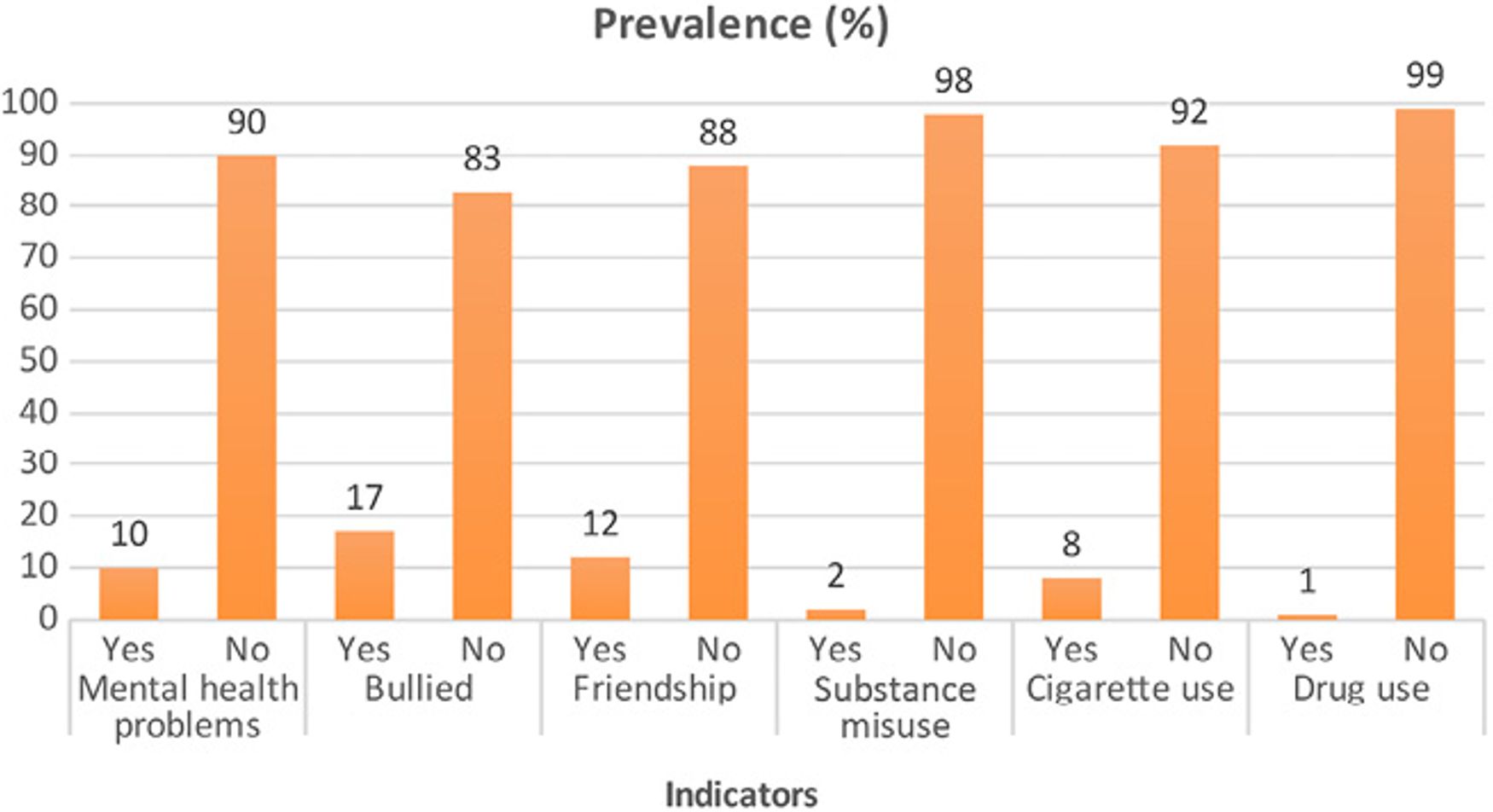
As shown in Figure 1, 10% of the students reported mental health problems, while 90% did not. Bullying was reported by 17% of students (83% reported no bullying). Regarding the friendship indicators, which reflect loneliness or social withdrawal, 12% of the students indicated feeling lonely or socially withdrawn (88% did not). Substance misuse problems (composite) was reported by 2% (98% reported none). Cigarette use (past 30 days) was 8% and drug use was 1%.
Relationships between Demographic Variables, Mental Health, and Substance Addiction
Significant associations were observed between mental health problems and age (p = .002), sex (p = .038), grade (p = .021), smoking (p < .001), and drug use (p < .001). Mental health problems increased with age, from 6.3% at 14 years to 14.0% at 16 years and older. They were more common among females (12.0%) than males (9.1%), and increased with grade level: 7.8% in first intermediate to 12.1% in the third intermediate. Smoking and drug use were strongly associated with poor mental health: 32.3% of smokers and 56.5% of drug users reported mental health problems compared with 8.5% and 9.5% among non-users, respectively. Similarly, Substance addictions were associated with age (p = .002), sex (p = .019), bullying (p < .001), loneliness or social withdrawal (no friendship) (p < .001), and mental health problems (p < .001). The prevalence of addiction increased with age, reaching 3.9% among those aged <16 years. Males (2.8%) were more likely than females (1.2%) to report Substance addiction. The rates were higher among students who were bullied (6.4%), those who felt lonely or lacked friends (9.6%), and those with mental health problems (12.2%) compared to their counterparts (1.2%, 1.1% and 0.9%, respectively). No significant differences were found by BMI for either outcome (p > .6). Full statistical results are provided in Table 3.
| Table 3. Associations between demographic, psychosocial, and behavioral variables with mental health problems and substance addictions among Iraqi adolescents | ||||||||
| Variables |
|
|
|
|
||||
|
|
|
|
|
|||||
| Age | ≤11 |
|
|
|
|
|
|
|
|
|
|
|
|
|
||||
| 12 |
|
|
|
|
|
|||
|
|
|
|
|
|
||||
| 13 |
|
|
|
|
|
|||
|
|
|
|
|
|
||||
| 14 |
|
|
|
|
|
|||
|
|
|
|
|
|
||||
| 15 |
|
|
|
|
|
|||
|
|
|
|
|
|
||||
| 16+ |
|
|
|
|
|
|||
|
|
|
|
|
|
||||
| Gender | Male |
|
|
|
|
|
|
|
|
|
|
|
|
|
||||
| Female |
|
|
|
|
|
|||
|
|
|
|
|
|
||||
| Grade | First intermediate |
|
|
|
|
|
|
|
|
|
|
|
|
|
||||
| Second intermediate |
|
|
|
|
|
|||
|
|
|
|
|
|
||||
| Third intermediate |
|
|
|
|
|
|||
|
|
|
|
|
|
||||
| BMI | Underweight |
|
|
|
|
|
|
|
|
|
|
|
|
|
||||
| Normal |
|
|
|
|
|
|||
|
|
|
|
|
|
||||
| Overweight |
|
|
|
|
|
|||
|
|
|
|
|
|
||||
| Obese |
|
|
|
|
|
|||
|
|
|
|
|
|
||||
| Smoking cigarettes | Yes |
|
|
|
|
|
|
|
|
|
|
|
||||||
| No |
|
|
|
|||||
|
|
|
|
||||||
| Using drugs | Yes |
|
|
|
|
|
|
|
|
|
|
|
||||||
| No |
|
|
|
|||||
|
|
|
|
||||||
| Being bullied | Yes |
|
|
|
|
|
|
|
|
|
|
|
||||||
| No |
|
|
|
|||||
|
|
|
|
||||||
| Feeling lonely/No friendship | Yes |
|
|
|
|
|
|
|
|
|
|
|
||||||
| No |
|
|
|
|||||
|
|
|
|
||||||
| Mental health | Yes |
|
|
|
|
|
|
|
Prediction of Mental Health and Substance Addiction Based on Demographic Characteristics
Mental Health
Multivariate logistic regression indicated that female students had significantly higher odds of reporting mental health problems (Adjusted Odds Ratio [AOR] = 1.79, 95% CI 1.25-2.57, p = .002). The likelihood of mental health problems also increased with grade level, particularly among second-grade students (AOR = 1.69, 95% CI: 1.06-2.69, p = .028). Smoking and drug use remained the strongest predictors, with smokers (AOR = 4.49, 95% CI: 2.77-7.27, p < .001) and drug users (AOR = 6.94, 95% CI: 2.68-18.03, p < .001) showing markedly higher odds of mental health problems. The model explained 10.8% of the variance (Nagelkerke R2 = 0.108), and the Hosmer-Lemeshow test indicated a good fit (x2 = 5.58, p = .694).
Substance Addiction
In the adjusted model, male students were more likely to report Substance addictions, while being female was protective (AOR = 0.40, 95% CI: 0.17-0.95, p = .038). Bullying and loneliness or lack of friendship were the strongest predictors: students who were bullied had 3.6 times higher odds (AOR = 3.58, 95% CI 1.70-7.55, p = .001), and those who reported loneliness or no close friends had 8.1 times higher odds (AOR = 8.07, 95% CI: 3.78-17.26, p < .001) of substance addictions. The model explained 12.6% of the variance (Nagelkerke R2 = 0.126), with an adequate fit (x2 = 12.38, p = .135). The complete regression coefficients and CIs are presented in Table 4.
|
Percentages are weighted; p values are from design-corrected Chi-square (Rao–Scott) tests. The cue “a” in the table footnote indicates that the −2 Log Likelihood value corresponds to the final model after adjustment for all variables in the multivariate logistic regression analysis (significant at p < 0.001). |
|||||||||
| Table 4. Multivariate logistic regression predicting mental-health problems and substance addictions among Iraqi adolescents | |||||||||
| Variables |
|
|
|||||||
| Age | ≤11 |
|
|
|
|
|
|
|
|
| 12 |
|
|
|
|
|
|
|
|
|
| 13 |
|
|
|
|
|
|
|
|
|
| 14 |
|
|
|
|
|
|
|
|
|
| 15 |
|
|
|
|
|
|
|
|
|
| 16 |
|
|
|
|
|
|
|
|
|
| Constant |
|
|
|
|
|||||
| Gender | Male |
|
|
|
|
|
|
|
|
| Female |
|
|
|
|
|
|
|
|
|
| Constant |
|
|
|
|
|||||
| Grade | First intermediate |
|
|
|
|
|
|
|
|
| Second intermediate |
|
|
|
|
|
|
|
|
|
| Third intermediate |
|
|
|
|
|
|
|
|
|
| Constant |
|
|
|
|
|||||
| BMI | Underweight |
|
|
|
|
|
|
|
|
| Normal |
|
|
|
|
|
|
|
|
|
| Over weight |
|
|
|
|
|
|
|
|
|
| Obese |
|
|
|
|
|
|
|
|
|
| Constant |
|
|
|
|
|||||
| Cigarette | No |
|
|
|
|
|
|
|
|
| Yes |
|
|
|
|
|
|
|
||
| Constant |
|
|
|
|
|||||
| Drugs | No |
|
|
|
|
|
|
||
| Yes |
|
|
|
|
|
|
|||
| Constant |
|
|
|
|
|||||
| Bullied | No |
|
|
|
|
|
|
||
| Yes |
|
|
|
|
|
|
|||
| Constant |
|
|
|
|
|||||
| Friendship | No |
|
|
|
|
|
|
||
| Yes |
|
|
|
|
|
|
|||
| Constant |
|
|
|
|
|||||
| Model summary | −2 Log likelihood |
|
|
|
|||||
| Cox and Snell R square |
|
|
|
||||||
| Nagelkerke R square |
|
|
|
||||||
| Hosmer and Lemeshow test | Chi-square |
|
|
|
|||||
| p |
|
|
|
||||||
Discussion
This study aimed to examine the prevalence of substance use and its association with mental health problems among adolescents in Iraq aged 11-16 years. The findings revealed a 10.3% prevalence of mental health problems and 2.1% of Substance use problems. Although these data were collected more than a decade ago, they remain significantly relevant for several critical reasons. The 2012 GSHS represents the most recent nationally representative dataset for Iraqi adolescents that measures both mental health problems and Substance use problems using standardized instruments from WHO, which allows international comparisons. Second, these results probably underestimate the current situation, considering the increased use of substances since 2012. For example, the number of patients treated for substance abuse in Iraq more than doubled from 2979 in 2017 to 6101 in 2021, while individuals accused of substance-related charges increased from 6393 to 14,391 during the same period (Muzil et al., 2023). Third, Iraq has changed from a transit region to a production and consumption zone for substances, substantially changing the accessibility and prevalence of substance use among adolescents. Changes in social and digital media suggest that current rates may be higher, as 2012 is a period characterized by greater social conservatism and restricted digital exposure. Therefore, the current study provides not only historical records but also a critical reference fact for trend analysis, allowing authorities to predict, compare, and discourse adolescent psychosocial risks in past, present, and future times. The findings contribute significantly to understanding these issues, especially given the rigorous binary classification applied to the variables to ensure methodological consistency and analytical precision. Despite the fact that the data are from 2012, their continued importance and validity are derived from their status as a national survey conducted collaboratively by the Iraqi Ministry of Health, the WHO, and the CDC, and the absence of comparable national studies examining this specific age group and interconnected issues to date. The findings show that even in 2012, young people in Iraq were already experiencing mental health challenges and addiction, despite living in a time that was arguably less digitally advanced and more socially restricted compared to today’s more open society. Currently, addiction has become more widespread and prevalent in Iraq, as the country has transitioned from a transit zone to a production zone for drug use, as evidenced by the data and studies cited in the introduction. These indicate a significant increase in substance use, with the number of patients treated for substance abuse and individuals charged for substance-related charges more than doubling between 2017 and 2021. More recently, a study conducted in Najaf involved 112 young drug users aged 10-29 years, who were interviewed and surveyed about their drug use. Among the participants, 27 were female and 85 were male (Alkhudhairy et al., 2024). Importantly, both mental health problems and substance use behaviors increased with age, particularly among 15 and 16-year-olds, who reported the highest rates. Logistic regression confirmed that older adolescents had significantly higher odds of experiencing emotional distress and using substances. These age-related patterns are consistent with developmental research showing that mid-to-late adolescence is a critical period for the emergence of mental disorders and risky behaviors (Munno et al., 2016; Ranasinghe et al., 2016; Suhail, 2012). Although some regional studies, such as Hossain et al. (2024) in Bangladesh, reported weaker associations, the Iraqi context marked by post-conflict instability, limited youth services, and academic pressure may explain the increased vulnerability among older adolescents. The academic stage also appeared to influence these outcomes. Students in the second and third intermediate grades reported higher rates of mental health problems and substance use behaviors, with the second grade significantly associated with higher odds (AOR = 1.686). These years often involve increased academic expectations, identity development, and peer stressors. Giota and Gustafsson (2017) observed that perceived mental demands and psychological stress tend to increase during intermediate schooling (Giota and Gustafsson, 2017). Although no statistically significant differences were found by grade specifically for substance use behaviors, the greater increase in both outcomes during these academic years suggests that mental stress may contribute to risky coping behaviors. The gender differences were notable and further reinforced the interconnection between emotional and behavioral health. Female students were significantly more likely to report mental health problems (AOR = 1.791), while males were more likely to engage in substance use behaviors (AOR = 0.404 for females, indicating a reduced risk). This aligns with international evidence suggesting that adolescent girls are more prone to internalizing problems such as depression and anxiety (Baiee et al., 2017), while boys more often externalize distress through behaviors like substance use (Lawrence et al., 2010; WHO, 2009). In Iraq, these patterns have been confirmed in a large-scale retrospective study involving more than 22,000 cases of substance abuse, where over 90% of the affected individuals were male (Younis et al., 2025), with alcohol being the most frequently abused substance. These gender-specific patterns emphasize the need for differentiated prevention strategies that address emotional resilience in girls and behavioral regulation in boys. Key behavioral and social predictors also linked mental health and substance use. Smoking (AOR = 4.486) and drug use (AOR = 6.944) emerged as significant predictors of mental health problems, suggesting that substance use can both result from and exacerbate psychological distress. Meanwhile, social isolation and bullying were strong shared risk factors: adolescents without close friends had significantly higher odds of engaging in Substance addictions (AOR = 8.074), and those who were bullied also had a higher risk (AOR = 3.583). These findings confirm that peer relationships and social safety are central to both emotional well-being and behavioural choices, particularly in adolescence when peer influence is strong and access to formal psychological support is limited. These findings recommend that peer support and school-based anti-bullying programmes may have an indirect protective outcome in decreasing substance use behaviours. In particular, interventions that nurture inclusive peer relationships, teach problem solving skills, and create safe school environments should be prioritised in Iraqi intermediate schools. The adequacy of the model was reassessed using the Hosmer-Lemeshow goodness-of-fit test (corrected for survey design where applicable). For both primary logistic models (mental health problems and Substance addictions), the test did not indicate misfit (p > .05), indicating that adjusted associations are not artefacts of model misspecification and are consistent with the multicollinearity and influence diagnostics.
Limitation
There are several limitations to consider in this study. First, the primary constraint is the time of the dataset, which may not fully capture the current dynamics of adolescent mental health and substance use in Iraq, especially given the recent increase in drug production and use. Second, the operationalization of “substance use behaviors” in the study was restricted to cigarettes, tobacco products, and illicit drugs (marijuana, amphetamines/methamphetamines); behavioral addictions such as gaming, gambling, or internet use were not measured due to survey instrument restrictions. While this limitation reflects the available GSHS items, it means the results discourse substance use specifically rather than the wider range of Substance addictions. Third, reliance on self-reported data introduces potential for recall bias and underreporting due to stigma around mental illness and substance use. Additionally, the cross-sectional design limits causal interpretation, making it difficult to determine the directionality of the observed relationships between variables. Finally, certain subgroups, such as displaced adolescents or those out of school, may have been under-represented in the original survey, reducing the generalizability of the findings.
Implications and Suggestions for Future Research
The findings support several policy and programmatic recommendations.
Integrated school-based interventions: It is recommended to design comprehensive and integrated intervention programs that address both mental health and substance use disorder) and decapitalaize the (S) from Substance addictions among Iraqi adolescents. Interventions should be gender-sensitive, recognizing that female students are more vulnerable to emotional distress, while male students are more likely to engage in risk-taking behaviors such as substance use. Schools represent an effective platform for these efforts, where preventive education, peer support programs, and referral systems can be integrated into the academic environment.
National policy updates: Given Iraq’s changing role in regional drug trends—from a transit zone to a production and consumption zone—and the growing evidence of substance use among youth, broader policy responses are urgently needed. These should include increased investment in mental health services, training for school staff and healthcare providers, and nationwide awareness campaigns. Community involvement, particularly with families, educators, and local leaders, will be essential to reduce stigma and build a supportive environment for youth.
Nationally longitudinal representative surveys: There is also a critical need for updated and longitudinal research to track the evolution of adolescent mental health and addiction in Iraq, assess the effectiveness of school and community-based interventions, and inform targeted, evidence-based strategies. Future research should include out-of-school youth and adolescents from high-risk or marginalized communities to capture the full scope of the problem and ensure that interventions are both equitable and comprehensive.
To conclude, this study highlighted the significant co-occurrence of mental health problems and substance use behaviours among Iraqi adolescents aged 11-16, even in a period marked by more conservative social structures and lower digital exposure. The findings reveal that older students and females are particularly vulnerable to emotional distress, while substance use behaviors increase with age and are more common among males. Factors such as smoking, drug use, bullying, and lack of close friendships emerged as key predictors, reinforcing the interconnected nature of emotional and behavioral health in adolescence. Although based on data from 2012, the study provides a foundational reference point for understanding and responding to psychosocial risks in Iraq. As addiction becomes more prevalent in the country and mental health challenges persist, these findings emphasize the urgent need for early, integrated school-based interventions, supported by robust policies and community engagement, to promote healthier development outcomes for Iraqi youth present and future.
Alignment with the United Nations Sustainable Development Goals
This study aligns closely with the United Nations Sustainable Development Goals, particularly SDG 3: Good Health and Well-being, by promoting early detection and prevention of mental health problems and substance use among adolescents. It also contributes to SDG 4: Quality Education, as the findings underscore the importance of integrating mental health and psychosocial support within school systems to create safe and inclusive learning environments. Moreover, by addressing bullying, social exclusion, and gender disparities, the study supports SDG 5: Gender Equality and SDG 10: Reduced Inequalities. Together, these alignments highlight the study’s broader contribution to advancing adolescent well-being, equity, and resilience within Iraq’s education and public health sectors.
Acknowledgements
The authors thank the Iraqi Ministry of Health and the World Health Organization for making the Global School-Based Student Health Survey data publicly accessible.
Ethical approval
Ethics committee approval and informed consent were not required for this study.
Data availability statement
The data that support the findings of this study are available from the corresponding author upon reasonable request.
Conflict of interest
The authors declare that this study was conducted in the absence of any commercial or financial relationships that could be construed as a potential conflict of interest.
Funding
The authors declare that this study received no funding.
Generative AI statement
The authors declare that during the preparation of this study, the following AI-assisted technology was used: During the preparation of this work, the authors used AI to assist with language refinement and structural organization. After using this tool, the authors reviewed and edited the content as needed and take full responsibility for the content of the publication.
References
- Ahmed, D. R. (2024). The psychological profile of Iraq: A nation haunted by decades of suffering. Open Health, 5(1). https://doi.org/10.1515/ohe-2023-0024
- Alkhudhairy, M. K., Al-Tufaili, S. A., Al-Qazzaz, A. A., & Al-Mosauy, M. M. (2024). A survey study on drug abuse among young people in Al-Najaf governorate, Iraq. AIP Conference Proceedings, 3051(1), Article 030004. https://doi.org/10.1063/5.0191846
- Baiee, H. A., Kizar, Z. F., Jasim, H. S., & Jasim, S. S. (2017). Prevalence of suicidal ideation among Iraqi secondary school students in Babylon Province during the academic year 2016-2017. Medical Journal of Babylon, 14(3), 577-584. http://www.medicaljb.com
- de la Torre-Luque, A., Ozeylem, F., & Essau, C. A. (2021). Prevalence of Substance addictions among adolescents from 73 low-and middle-income countries. Addictive Behaviors Reports, 14, 100387. https://doi.org/10.1016/j.abrep.2021.100387
- Derevensky, J. L. (2019). Behavioral addictions: Some developmental considerations. Current Addiction Reports, 6(3), 313-322. https://doi.org/10.1007/s40429-019-00257-z
- di Nicola, M., Ferri, V. R., Moccia, L., Panaccione, I., Strangio, A. M., Tedeschi, D., Grandinetti, P., Callea, A., De-Giorgio, F., Martinotti, G., & Janiri, L. (2017). Gender differences and psychopathological features associated with addictive behaviors in adolescents. Frontiers in Psychiatry, 8, Article 256. https://doi.org/10.3389/fpsyt.2017.00256
- Faeq, D. T., Ahmed, D. R., Aziz, I. A., & Yıldırım, M. (2024). Perceptions and usage of traditional cigarettes, electronic cigarettes, and waterpipes among young and middle-aged adults in Iraq: A descriptive study. Journal of Ethnicity in Substance Abuse, 1-12. https://doi.org/10.1080/15332640.2024.2366982
- Giota, J., & Gustafsson, J. E. (2017). Perceived demands of schooling, stress and mental health: Changes from grade 6 to grade 9 as a function of gender and cognitive ability. Stress and Health, 33(3), 253-266. https://doi.org/10.1002/smi.2693
- Hossain, S., Chowdhury, P. B., Mohsin, M., & Biswas, R. K. (2024). Addictive behavior and mental health of adolescents aged 11-17 years in Bangladesh in 2014: A cross-sectional study. Health Science Reports, 7(7), e2231. https://doi.org/10.1002/hsr2.2231
- Lawrence, D., Mitrou, F., Sawyer, M. G., & Zubrick, S. R. (2010). Smoking status, mental disorders and emotional and behavioural problems in young people: Child and adolescent component of the National Survey of Mental Health and wellbeing. Australian and New Zealand Journal of Psychiatry, 44(9), 805-814. https://doi.org/10.3109/00048674.2010.482921
- Munno, D., Saroldi, M., Bechon, E., Sterpone, S. C. M., & Zullo, G. (2016). Addictive behaviors and personality traits in adolescents. CNS Spectrums, 21(2), 207-213. https://doi.org/10.1017/S1092852915000474
- Muzil, J. A., Abdulwahid, D. A., Abed, A. H., & Kammad, Z. A. (2023). Substance abuse in Iraq, quantifying the picture. Journal of Population Therapeutics and Clinical Pharmacology, 30(12), 302-313. https://doi.org/10.47750/jptcp.2023.30.12.036
- Nath, A., Choudhari, S. G., Dakhode, S. U., Rannaware, A., & Gaidhane, A. M. (2022). Substance abuse amongst adolescents: An issue of public health significance. Cureus, 14(11), e31193. https://doi.org/10.7759/cureus.31193
- Park-Lee, E., Ren, C., Cooper, M., Cornelius, M., Jamal, A., & Cullen, K. A. (2022). Tobacco product use among middle and high school students - United States, 2022. MMWR. Morbidity and Mortality Weekly Report, 71(45), 1429-1435. https://doi.org/10.15585/mmwr.mm7145a1
- Ranasinghe, S., Ramesh, S., & Jacobsen, K. H. (2016). Hygiene and mental health among middle school students in India and 11 other countries. Journal of Infection and Public Health, 9(4), 429-435. https://doi.org/10.1016/j.jiph.2015.11.007
- Santangelo, O. E., Provenzano, S., & Firenze, A. (2022). Risk factors for addictive behaviors: A general overview. International Journal of Environmental Research and Public Health, 19(11), 6583. https://doi.org/10.3390/ijerph19116583
- Suhail, H. J. (2012). Prevalence of Mental Disorders among adolescents of secondary schools in Diwaniya governorate. QMJ, 8(13), 18-27. https://doi.org/10.28922/qmj.2012.8.13.18-27
- Truong, A., Moukaddam, N., Toledo, A., & Onigu-Otite, E. (2017). Addictive disorders in adolescents. Psychiatric Clinics of North America, 40(3), 475-486. https://doi.org/10.1016/j.psc.2017.05.012
- World Health Organization. (2009). Iraq mental health survey 2006/7. Iraq mental health survey. https://applications.emro.who.int/dsaf/EMRPUB_2009_EN_1367.pdf
- World Health Organization. (2019). Global Youth Tobacco Survey fact sheet: Iraq, 2019. https://www.emro.who.int/images/stories/tfi/documents/fs_gyts_iraq_2019.pdf
- World Health Organization. (2023). Adolescent and young adult health. https://www.who.int/news-room/fact-sheets/detail/adolescents-health-risks-and-solutions
- Younis, N. M., Ahmed, M. M., & Majeed, H. M. (2025). Epidemiological profile of substance abuse in Iraq: Retrospective study. Journal of Education and Health Promotion, 14, 255. https://doi.org/10.4103/jehp.jehp_1139_24
License
Copyright (c) 2026 The Author(s). This is an open access article distributed under the Creative Commons Attribution License (CC BY), which permits unrestricted use, distribution, and reproduction in any medium or format, provided the original work is properly cited.