


Abstract
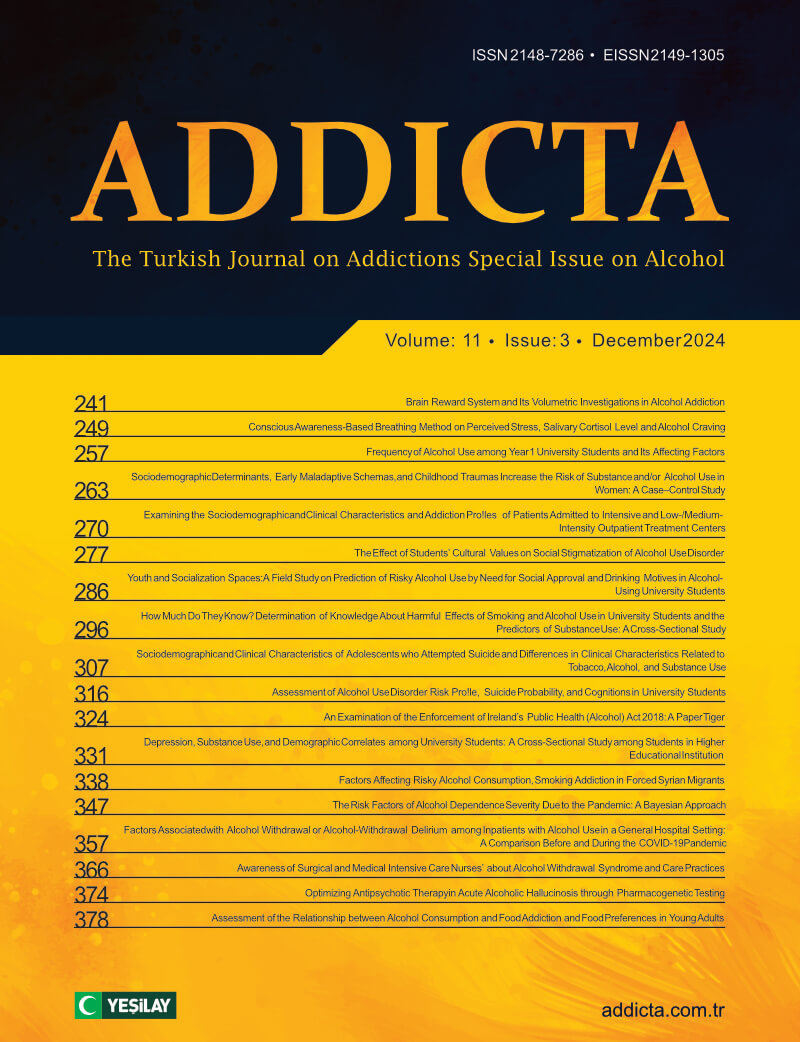
The aim of this study was to examine the sociodemographic and clinical characteristics and addiction pro- files of patients diagnosed with alcohol and substance use disorders admitted to intensive and low/medium intensity outpatient treatment centers. The study was designed as a cross-sectional follow-up study and was conducted at the outpatient rehabilitation center as an intensive outpatient treatment center and also at low/medium intensity treatment centers. Patients were given a demographic information form and the Addiction Profile Index. At the end of three months, whether the patients were still in treatment and whether they were able to complete the early remission process according to DSM-5 was assessed by telephone calls, patient data recorded in the hospital system, and control interviews. The main findings were that patients in intensive outpatient treatment were more likely to be older, unemployed, have a higher addiction severity, history of psychiatric treatment, and family history of addiction. In addition, at the end of three months, most patients in the intensive outpatient treatment center were in early remission. The results of this research show that intensive outpatient treatment programs are particularly effective for patients with more severe addiction profiles and highlight the critical role of appropriate patient referral in optimizing treatment outcomes, preventing relapse, and ultimately improving long-term recovery.
Keywords: Alcohol use disorder, addiction, intensive outpatient treatment, low/medium intensity outpa- tient treatment, substance use disorder
License
Copyright (c) 2024 The Author(s). This is an open access article distributed under the Creative Commons Attribution License (CC BY), which permits unrestricted use, distribution, and reproduction in any medium or format, provided the original work is properly cited.